Patient Medication Guide
Getting started with Wegovy tablets
oral semaglutide · once-daily tablet
A plain-language guide to taking semaglutide oral tablets for long-term weight management — how to take them, what to expect, and when to reach out for help.
Last clinically reviewed: July 14, 2026 by Dr. Prajeet Reddy, MD (Medical Director)
What Wegovy tablets are and how they work
Wegovy (semaglutide) oral tablets are a once-daily medicine in a class called GLP-1 receptor agonists. They are approved for adults to support long-term weight management, used together with a reduced-calorie diet and increased physical activity. In adults who also have established heart or blood-vessel disease along with obesity or overweight, semaglutide is also used to lower the risk of major cardiovascular events such as heart attack and stroke.
Semaglutide works in a few ways at once: it acts on appetite centers in the brain so you feel less hungry and eat less, it slows how quickly your stomach empties so you feel full longer after meals, and it helps your body manage blood sugar.
A quick note on names
How and when to take your tablets
How you take this medicine matters a great deal — taking it the wrong way can keep it from working.
Each morning, on an empty stomach
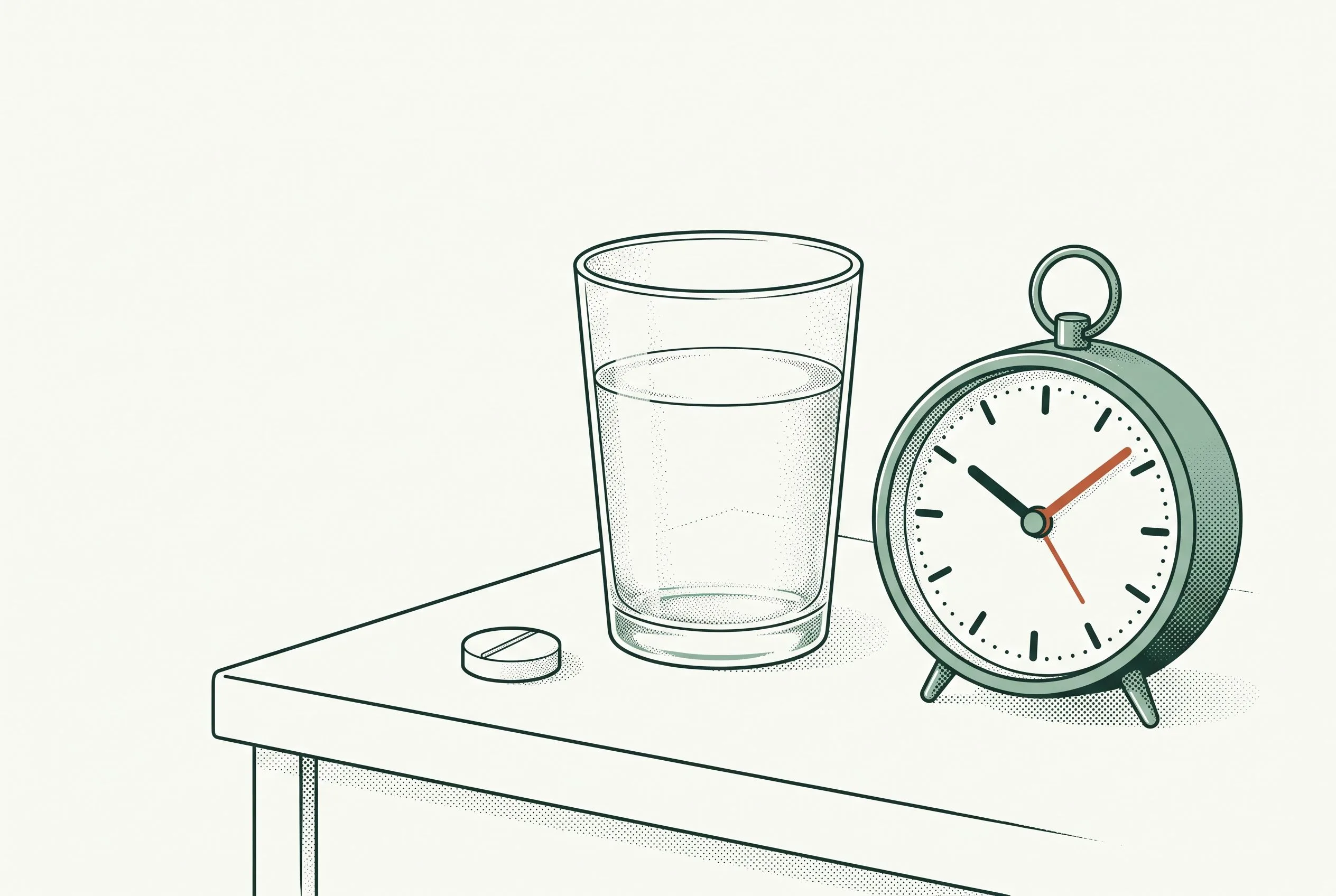
- Take one tablet first thing in the morning, on an empty stomach, before eating or drinking anything else.
- Swallow it whole with a small sip of plain water — no more than about 4 ounces (½ cup). Do not split, crush, chew, or dissolve the tablet.
- Wait at least 30 minutes before you eat, drink anything other than that water, or take any other pills. Taking other tablets at the same time can lower how much medicine your body absorbs.
Your dose over time
Wegovy tablets are started low and increased gradually as your prescriber directs, which gives your body time to adjust. Follow the schedule your care team gives you, and don’t change your dose on your own.
If you miss a dose
Skip the missed dose and take your next dose the following day at your usual time. Don’t take two tablets to make up for a missed one.
Storing your tablets
- Keep them at room temperature (about 68–77°F) — no refrigerator needed.
- Store tablets in their original bottle to protect them from moisture, and keep the bottle closed.
- Because there’s no cold chain and no needles, these tablets are straightforward to travel with.
What to expect
A reduced appetite is the main effect of this medicine — many people notice they feel full sooner and have fewer food cravings. This can feel unfamiliar at first. Even when your appetite is low, it’s important to eat regular, small amounts and get enough protein and fluids.
Weight change is gradual and builds over months rather than days. In the OASIS 4 (Novo Nordisk) trial, adults taking oral semaglutide alongside a reduced-calorie diet and more activity lost about 13.6% of their starting weight on average; results vary from person to person. Stomach-related effects are most noticeable early on and around the time your dose goes up, and they tend to ease as your body adjusts.
This is a long-term medicine
Side effects and how to manage them
The most common side effects involve the stomach and digestion: nausea, vomiting, diarrhea, constipation, indigestion, and heartburn. Nausea is the most frequent and is usually mild to moderate; for most people it lasts a couple of weeks and then settles, while constipation can linger a bit longer. Some people also notice headache, tiredness, a tingling or altered skin sensation, mild hair shedding, or a small increase in heart rate.
Things that often help
- Eat smaller, more frequent meals and stop when you feel full.
- Go easy on fried, greasy, spicy, and very sugary foods, which can worsen nausea.
- Avoid large portions — big meals make vomiting more likely.
- Sip fluids through the day; ginger or peppermint tea may ease queasiness.
- For heartburn, try not to lie down for 2–3 hours after eating.
- For constipation, focus on fluids and fiber first.
Most stomach symptoms improve once you settle onto a steady dose. If a side effect is persistent, severe, or hard to manage, your care team can suggest options — including reviewing your dose with you. See the next sections for symptoms that need prompt attention.
Staying safe on this medication
Boxed warning — thyroid tumors
In animal studies, semaglutide caused thyroid tumors; whether it does so in people is not known. You should not take this medicine if you or a family member has had medullary thyroid cancer (MTC) or the condition Multiple Endocrine Neoplasia syndrome type 2 (MEN 2). Tell your care team about a lump or swelling in your neck, trouble swallowing, shortness of breath, or a hoarse voice that doesn’t go away.
Allergic reactions
Don’t take this medicine if you’ve had a serious allergic reaction to semaglutide. Serious reactions are an emergency — see the help section below.
Pancreas, gallbladder, and kidneys
Semaglutide has been linked to inflammation of the pancreas and to gallbladder problems. Lasting stomach upset that causes dehydration can also strain the kidneys, so staying hydrated matters — especially if you have ongoing nausea, vomiting, or diarrhea.
If you take other medicines
Tell your care team about everything you take. If you use insulin or a sulfonylurea for diabetes, your risk of low blood sugar can rise, and that medicine may need adjusting. If you take levothyroxine for your thyroid, your care team may check your thyroid blood tests after you start or change Wegovy. Because the tablets are taken on an empty stomach with a 30-minute wait, keep other oral medicines separated as your care team advises.
Surgery, procedures, and sedation
Because this medicine slows stomach emptying, tell every doctor, dentist, and anesthesia provider that you take it before any surgery, procedure, or sedation. Recommendations on how to handle GLP-1 medicines around procedures are still evolving and differ between expert groups, so your care team will advise you on what to do for your specific situation rather than a one-size-fits-all rule.
Pregnancy and breastfeeding
This medicine is not for use during pregnancy. Because semaglutide stays in your body for some weeks, plan to stop it at least 2 months before trying to become pregnant, and stop right away if you learn you are pregnant. Breastfeeding is not recommended while taking Wegovy tablets — an ingredient in the tablet that helps it absorb can pass into breast milk. Talk with your prescriber about reliable birth control and about timing.
Mood
If you notice new or worsening depression, mood changes, or any thoughts of harming yourself, contact your care team right away (see below).
When to get help
Use this guide to decide how quickly to act. When in doubt, reach out — your care team would rather hear from you early.
- Severe stomach pain, especially pain spreading to your back or with ongoing vomiting (possible pancreas inflammation)
- Signs of a serious allergic reaction: trouble breathing, swelling of the face, lips, tongue, or throat, a fast heartbeat, or severe rash
- Severe dehydration: fainting or severe dizziness, very dark urine, or being unable to keep any fluids down for more than a day
- A neck lump with trouble swallowing or breathing
- Sudden loss of vision in one eye
- Thoughts of harming yourself
- Vomiting or inability to eat or drink that lasts more than 24 hours
- Severe pain in the upper-right belly (possible gallbladder problem)
- Signs of low blood sugar — shakiness, confusion, sweating — especially if you take insulin or a sulfonylurea
- New or worsening vision changes
- A fast resting heartbeat that stays well above your usual
- Severe constipation with a swollen, distended belly
- Mild to moderate nausea, diarrhea, or constipation that continues beyond about 2 weeks at a steady dose
- Hair thinning or increased shedding
- Mild heartburn or indigestion
- Tingling or altered skin sensation
- Weight loss that feels faster than expected, or concerns about muscle weakness
- Questions about an upcoming surgery or procedure
In a medical emergency, call 911 or go to the nearest emergency room for severe or life-threatening symptoms.
Educational information only
This guide is for education and does not replace your prescriber’s instructions or the Wegovy Medication Guide that comes with your medication. Please read that guide and follow the directions from your care team, which are tailored to you. Medication labeling can change — your Medication Guide is the most current source for your specific product.
Questions about your care
For non-urgent questions, sign in to your Imbue patient portal and send a secure message to your care team. Please don’t use the portal for emergencies.
Clinical review
Clinical content reviewed by Dr. Prajeet Reddy, MD, Medical Director (Cyane Medical Group California PC). Last reviewed July 14, 2026.
Imbue Health · Patient education · Last reviewed July 14, 2026