Side effects
Hair Loss on GLP-1s: Why It Happens and What to Do
Last clinically reviewed: July 20, 2026 by Dr. Prajeet Reddy, MD (Medical Director)
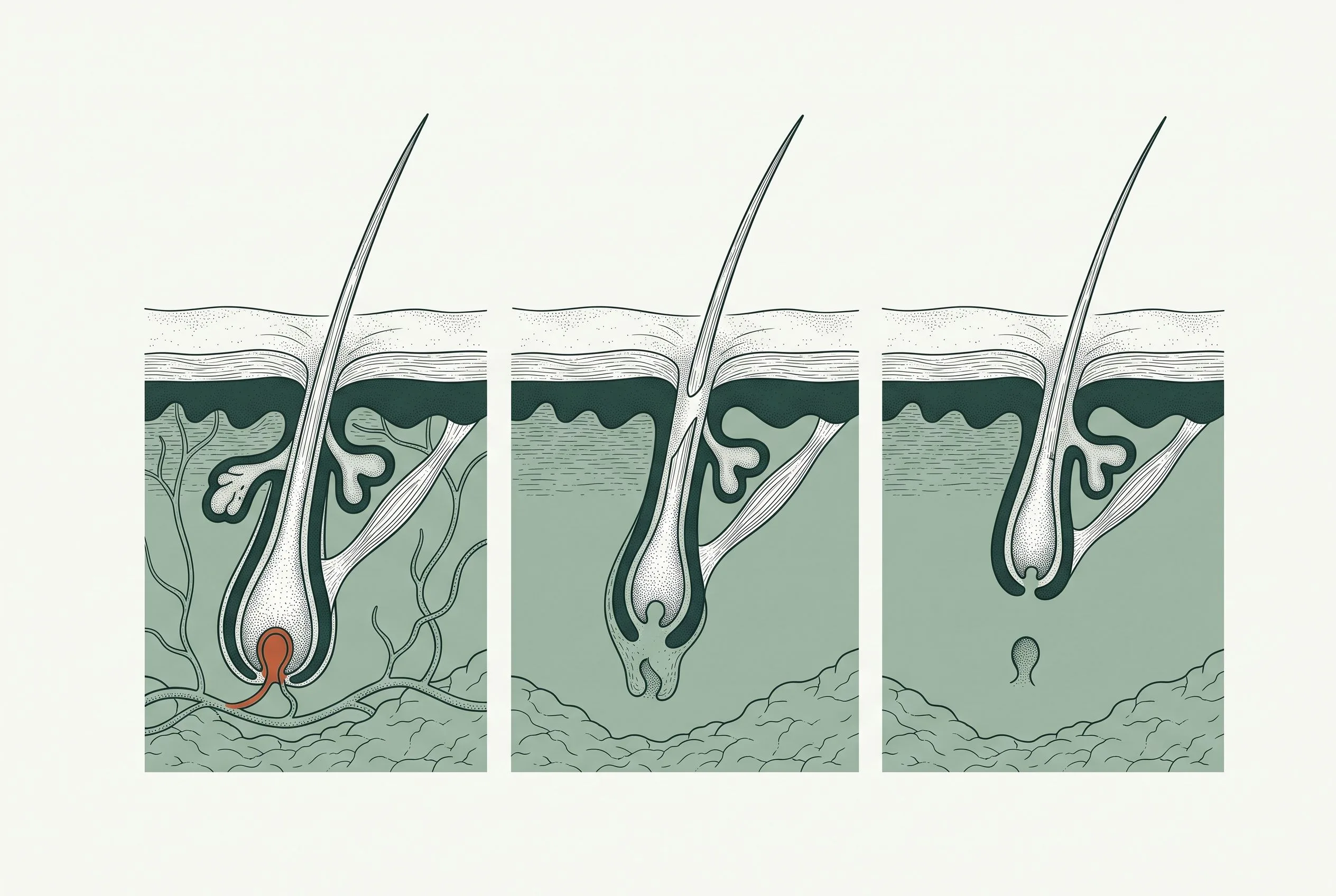
If you are taking a GLP-1 medication — such as semaglutide (Wegovy), tirzepatide (Zepbound), or liraglutide (Saxenda) — and have noticed more hair falling out than usual, you are not alone. This type of hair shedding is called telogen effluvium (teh-LOH-jen eh-FLOO-vee-um), and it is one of the most common causes of temporary, diffuse hair loss.[1][2]
Why Does This Happen?
Your hair grows in cycles. At any given time, most of your hair is in a "growing phase" (called anagen), which lasts several years. A smaller number of hairs are in a "resting phase" (called telogen), which lasts about 3 to 5 months before the hair naturally falls out and is replaced by a new one.[1]
When your body experiences a significant stress — such as rapid weight loss, major surgery, illness, or childbirth — many hair follicles can be pushed into the resting phase all at once. A few months later, those hairs shed together, which can feel alarming. This is telogen effluvium.[1][2]
GLP-1 medications can cause significant weight loss, sometimes quite rapidly. This rapid change in body weight is the most likely reason for the increased hair shedding.[3][8] In addition, the strong appetite suppression from these medications can lead to lower intake of calories and nutrients that are important for healthy hair growth, such as protein, iron, zinc, and vitamin D.[9][10]
A 2026 meta-analysis of over 4,000 patients found that people taking GLP-1 medications had about a 3-fold higher risk of hair shedding compared to those taking a placebo, with roughly 4 out of every 100 people experiencing noticeable hair loss.[4]
Key Facts to Know
- Hair shedding typically begins 2 to 4 months after the period of rapid weight loss.[2]
- It is temporary. In most cases, hair shedding slows down and hair regrows on its own within 6 to 9 months once the trigger (rapid weight loss or nutritional deficiency) stabilizes.[1][2]
- You are not going bald. Telogen effluvium causes diffuse thinning — your hair may look thinner overall, but it does not cause permanent bald patches.[1]
What Can I Do About It?
While telogen effluvium usually resolves on its own, there are steps you can take to support your hair health:
Prioritize protein. Protein is the building block of hair. During weight loss, aim for at least 1.2 to 1.6 grams of protein per kilogram of body weight per day (about 80 to 120 grams per day for most adults). Because GLP-1 medications reduce appetite, try eating protein-rich foods first at each meal. Good sources include eggs, chicken, fish, Greek yogurt, beans, lentils, and tofu.[6][7]
Eat a balanced, nutrient-rich diet. Even though your appetite may be reduced, focus on nutrient-dense foods. Include plenty of vegetables, fruits, whole grains, and lean proteins. Eating smaller, more frequent meals may help you get enough nutrition.[7]
Talk to your doctor about checking your nutrient levels. Deficiencies in iron, vitamin D, zinc, and B vitamins have been linked to hair shedding. A simple blood test can check for these. If a deficiency is found, your doctor may recommend a supplement.[5][9]
Consider a daily multivitamin. A general multivitamin that includes iron and calcium may help fill nutritional gaps during periods of reduced food intake. However, avoid taking high-dose biotin supplements without talking to your doctor first — biotin can interfere with certain blood tests, including heart and thyroid tests.[7][10]
Be gentle with your hair. Avoid tight hairstyles, excessive heat styling, and harsh chemical treatments while your hair is recovering. Use a wide-tooth comb and avoid pulling or tugging on your hair.
Stay hydrated. Drink plenty of water throughout the day.[7]
When Should I Contact My Doctor?
- If hair shedding continues for more than 6 months without improvement
- If you notice patchy bald spots (this may indicate a different type of hair loss)[3]
- If you have other symptoms such as fatigue, feeling cold, or unexplained weight changes (which could suggest a thyroid problem)[2]
- If you are concerned about the amount of hair loss or it is affecting your quality of life
Should I Stop My Medication?
Do not stop your GLP-1 medication without talking to your doctor. These medications provide important health benefits, including weight management, blood sugar control, and heart protection. Your doctor can help you weigh the benefits of continuing treatment against the temporary hair shedding and may adjust your dose or rate of weight loss if needed.[3]
The Bottom Line
Hair shedding during rapid weight loss is common, temporary, and treatable. The most important things you can do are eat enough protein, maintain good nutrition, and be patient — your hair will very likely grow back. Your healthcare team is here to help you through this process.
Frequently asked questions
Will my hair grow back after GLP-1 hair loss?
Very likely yes. Telogen effluvium is temporary — in most cases shedding slows and hair regrows on its own within 6 to 9 months once the trigger (rapid weight loss or a nutritional deficiency) stabilizes. It causes diffuse thinning, not permanent bald patches.
How common is hair loss on GLP-1 medications?
A 2026 meta-analysis of over 4,000 patients found about a 3-fold higher risk of hair shedding versus placebo, with roughly 4 in 100 people experiencing noticeable hair loss. The most likely driver is the rapid weight loss itself, along with reduced intake of protein, iron, zinc, and vitamin D.
Should I stop my GLP-1 medication because of hair loss?
Not without talking to your doctor. These medications provide important benefits — weight management, blood sugar control, and heart protection. Your doctor can weigh the benefits against the temporary shedding and may adjust your dose or rate of weight loss instead.
When should I see a doctor about hair shedding?
If shedding continues beyond 6 months without improvement, if you notice patchy bald spots (a sign of a different type of hair loss), if you have symptoms like fatigue or feeling cold (possible thyroid problem), or if the hair loss is affecting your quality of life.
Sources
- Telogen Effluvium — A Review of the Science and Current Obstacles — J Dermatol Sci 2021
- Hair Loss: Diagnosis and Treatment — American Family Physician 2024
- The Role of GLP-1 Receptor Agonists in Hair Loss: Clinical Evidence and Proposed Mechanisms — Dermatol Surg 2026
- GLP-1 Receptor Agonists and Hair Loss: A Systematic Review and Meta-Analysis — Diabetes Res Clin Pract 2026
- Nutritional Supplements for Treating Hair Loss: A Systematic Review — JAMA Dermatology 2023
- Nutritional Priorities to Support GLP-1 Therapy for Obesity — Joint Advisory, Am J Clin Nutr 2025
- AACE Consensus Statement: Evaluation and Treatment of Adults With Obesity — Endocrine Practice 2025
- Not All GLP-1 Receptor Agonists Are Alike: Real-World Endocrine and Dermatologic Safety — Diabetes Metab Res Rev 2026
- Vitamin and Mineral Deficiencies in Patients With Telogen Effluvium — J Drugs Dermatol 2016
- Addressing the Root Causes of Female Hair Loss and Non-Pharmaceutical Interventions — J Drugs Dermatol 2025
This article is for education and does not replace your prescriber’s instructions or the FDA Medication Guide that comes with your medication. Clinical content reviewed by Dr. Prajeet Reddy, MD, Medical Director (Cyane Medical Group California PC).
$29/mo membership — the lowest in GLP-1 telehealth. No contracts.