Why GLP-1 weight loss program prices feel unpredictable
Three things drive the price swings you see across GLP-1 subscription programs — and only one of them is the medication. Here’s what’s really going on, and how to get a monthly cost you can actually plan around.
Last clinically reviewed: May 26, 2026 by Dr. Prajeet Reddy, MD (Medical Director)
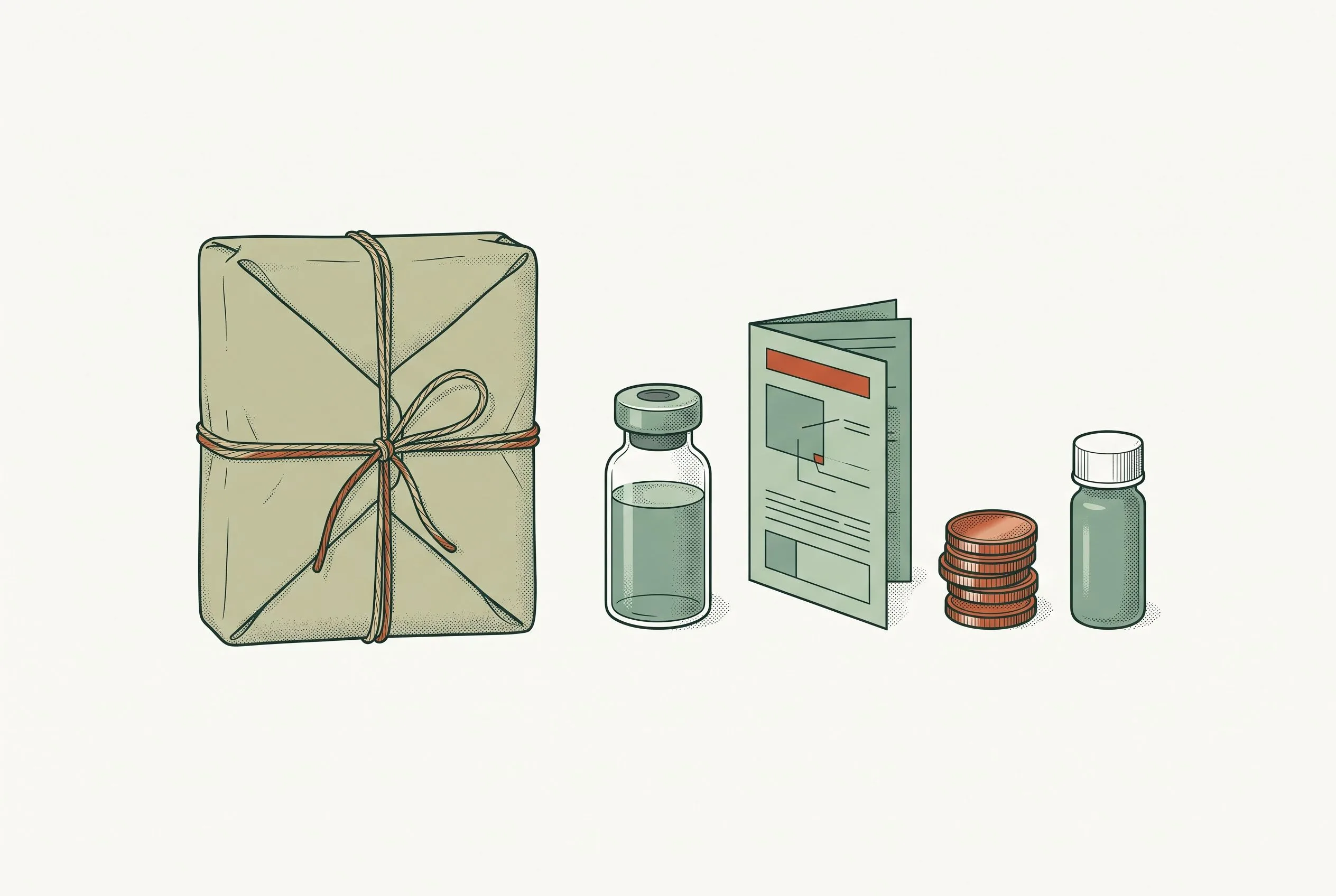
Shop three GLP-1 telehealth programs and you can get three wildly different prices for what looks like the same thing. That’s not your imagination — it’s the result of three independent factors stacking on top of each other. Understanding them makes it much easier to compare programs honestly.
Insurance & prior authorization
Medication price vs. markups
Membership fee structures
Driver 1: Insurance and prior authorization
When a program runs through insurance, your price depends on your plan, your deductible, and whether the medication is on the formulary that month. Many commercial plans require prior authorization for anti-obesity medication — documented BMI, proof of failed diet attempts, physician letters — a process that can take 2–6 weeks and still end in a denial. Medicare Part D generally doesn’t cover anti-obesity medication at all. Two people on the “same” program can pay very different amounts, and the same person’s cost can change mid-treatment if their plan updates its formulary. We cover this in depth in our insurance and GLP-1 coverage guide.
Driver 2: Medication cash-pay price vs. markups
The medication itself has a stable, published cash-pay price when it comes directly from the manufacturer — Novo Nordisk’s NovoCare for Wegovy® and Oral Wegovy®, and Eli Lilly’s LillyDirect for Foundayo™ and Zepbound®. Where prices get unpredictable is when a program substitutes compounded medication or routes the brand-name drug through resellers — each adding its own margin. Compounded products can look cheaper up front but carry FDA-flagged safety concerns and inconsistent pricing as compounding rules change.
Driver 3: Membership fee structures (the hidden one)
This is the driver most people miss. The way a program structures its membership fee — separate from the drug — has a huge effect on what you actually pay:
- •Introductory pricing that escalates. A low first-month rate that jumps after one or two billing cycles.
- •Bundling. Medication and physician care folded into one opaque monthly fee, so you can’t see what you’re paying for the drug versus the care.
- •Contracts and minimums. 3-month minimums or 12-month commitments that lock in spend before you know whether the treatment works for you.
How to get a predictable GLP-1 price
Pick a program that does the opposite of all three: unbundles physician care from medication, uses manufacturer cash-pay pricing, and charges a flat membership with no contract. That’s how Imbue Health is built.
- $29/month flat membership for physician care — never escalates, no contract
- Brand-name medication at NovoCare & LillyDirect published prices ($149–$299/mo)
- Total monthly cost from $178 — the same with or without insurance
See it in detail on membership & physician guidance, our locked-in pricing page, or estimate your cost with the cost calculator.
The bottom line: a sticker price means little without knowing which of these three drivers is behind it. Once you separate insurance noise, medication source, and fee structure, the cheapest predictable brand-name path is easy to spot — and you can verify it yourself on our cheapest GLP-1 and treatment cost pages.
Predictable pricing, by design
$29/month flat membership. Brand-name medication at manufacturer cash-pay pricing. No insurance maze, no escalating rates, no contracts.