Patient Medication Guide
Getting started with your Zepbound KwikPen
tirzepatide · multi-dose pen (4 doses)
A plain-language guide to using your once-weekly tirzepatide pen — how it works, how to inject and store it, what to expect, and when to reach out for help.
Last clinically reviewed: July 14, 2026 by Dr. Prajeet Reddy, MD (Medical Director)
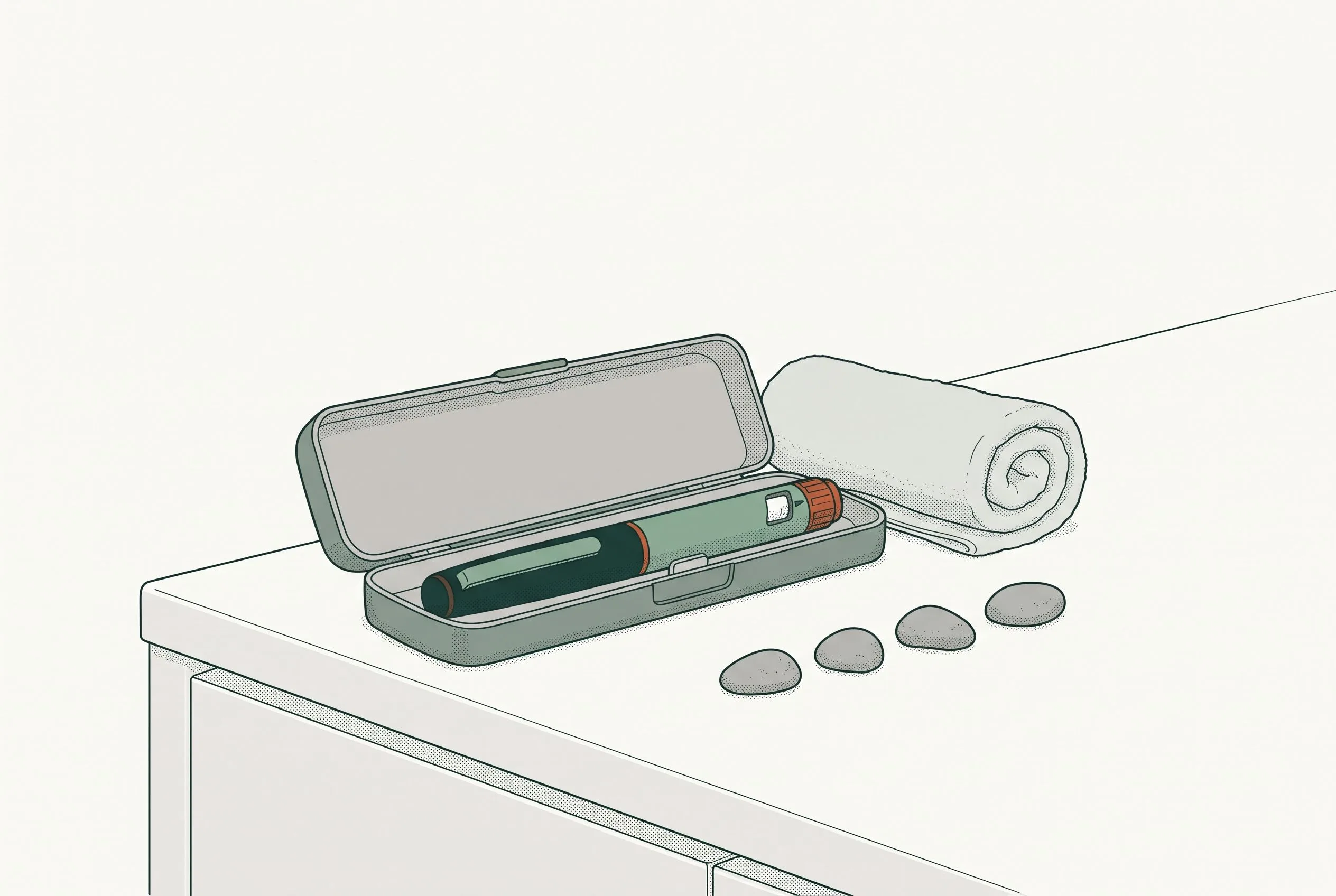
What Zepbound is and how it works
Zepbound (tirzepatide) is a prescription medicine you inject under the skin once a week. It’s used along with a reduced-calorie diet and more physical activity to help adults manage their weight over the long term. It’s also approved to treat moderate-to-severe obstructive sleep apnea in adults with obesity.
Tirzepatide works with two of your body’s own appetite-signaling pathways (called GIP and GLP-1). It helps you feel full sooner and stay full longer, and it slows how quickly your stomach empties. Together, these effects help lower how much you eat.
A key point to keep in mind
Your KwikPen is a single-patient pen that holds four weekly doses. That’s the main difference from a single-dose pen or vial: one pen carries a month of doses, so keeping track of how many you’ve used matters.
Using your KwikPen and storing it
- When
- Once a week, on any day, at any time of day — with or without food. Pick a day that’s easy to remember.
- Where
- Inject under the skin of your abdomen, thigh, or upper arm (upper arm only if someone else gives the injection). Move to a different spot each week.
- Before each dose
- Check that the liquid looks clear and colorless to slightly yellow — don’t use it if it’s cloudy, discolored, or has particles. Confirm the dose shown on the pen matches what your prescriber ordered, and attach a new needle.
- After each dose
- Remove the needle and place it in a sharps container. Never share your pen with anyone, even if you change the needle.
One pen = four weekly doses
If you miss a dose
Take it as soon as you can within 4 days (96 hours) of the missed dose. If more than 4 days have passed, skip it and take your next dose on your regular day. You can change your weekly day as long as your last dose was at least 3 days (72 hours) ago.
Dose changes
Your dose increases gradually as your prescriber directs. Follow the plan your care team gives you, and don’t change your dose on your own.
Storing your pens
- Keep pens in the refrigerator (36–46°F / 2–8°C) until you need them.
- Do not freeze your pens, and don’t use a pen that has been frozen.
- A pen can be kept at room temperature (up to 86°F / 30°C) if needed.
- Once you start using a pen, keep it in its original carton and throw it away after all four weekly doses or 30 days after first use — whichever comes first.
- Protect pens from heat and light, and store them in the original carton.
What to expect
Weight comes off gradually. In the SURMOUNT-1 / SURMOUNT-5 (Eli Lilly) trials, adults taking Zepbound along with a reduced-calorie diet and more activity lost, on average, up to about 22% of their starting body weight, depending on the dose. Results vary from person to person — some people lose more, others less.
Your appetite may change. Many people feel full sooner and notice they’re less hungry. That’s an expected effect of the medicine.
Side effects tend to be front-loaded. Stomach-related effects are most common in the first weeks after starting and after each dose increase, and they usually ease as your body adjusts.
Why staying on it matters
Habits that work alongside the medicine
Zepbound works best as a partner to healthy routines: balanced meals with enough protein to help protect muscle, staying well hydrated, and regular activity that includes some strength training.
Side effects and how to manage them
The most common effects involve the stomach and digestion: nausea, diarrhea, and constipation. You may also notice less appetite, indigestion, vomiting, belching, heartburn, mild tiredness, or mild redness and itching at the injection site. About 1 in 20 people notice some hair thinning, which is usually linked to weight loss rather than the medicine itself.
Most stomach symptoms are mild to moderate and improve as your body gets used to the medicine.
Things that can help
- Eat smaller, more frequent meals; eat slowly and stop when you feel full.
- Go easy on greasy, fried, spicy, and very sugary foods; limit alcohol and fizzy drinks.
- For constipation, more fluids and fiber often help.
- Stay well hydrated — especially during any nausea, vomiting, or diarrhea, since dehydration can strain your kidneys.
Safety considerations
Boxed warning — thyroid tumors
In animal studies, tirzepatide caused thyroid tumors. It isn’t known whether it causes these in people. Do not use Zepbound if you or a family member has had medullary thyroid cancer (MTC), or if you have Multiple Endocrine Neoplasia syndrome type 2 (MEN 2). Tell your care team about a lump or swelling in your neck, trouble swallowing, or a hoarse voice that doesn’t go away.
Also don’t use Zepbound if you’ve had a serious allergic reaction to tirzepatide.
Uncommon but important risks to be aware of
These are not common, but your care team weighs them with you: inflammation of the pancreas (pancreatitis), gallbladder problems, low blood sugar (mainly if you also take insulin or a sulfonylurea), dehydration that can affect the kidneys, and a rare eye condition linked to sudden vision loss. The when to get help section describes the warning signs.
Birth control
Zepbound can make birth control pills less effective. If you take the pill, use a backup method (such as condoms) or a non-oral method for 4 weeks after starting and for 4 weeks after each dose increase.
Pregnancy
Zepbound is not for use during pregnancy. If you could become pregnant or are planning a pregnancy, talk with your care team about birth control and about stopping the medicine well before a planned pregnancy.
Surgery and procedures
Because Zepbound slows stomach emptying, it matters for anesthesia safety. Tell your surgery and anesthesia team that you take Zepbound, ideally well before any planned procedure, so they can advise you. Guidance on this is still evolving, so your care team will give you personalized instructions.
When to get help
Use this as a quick guide. When in doubt, it's always okay to reach out — and trust your instincts if something feels seriously wrong.
- Signs of a serious allergic reaction: trouble breathing, swelling of the face, lips, tongue, or throat, severe rash, a racing heartbeat, or feeling faint.
- Severe stomach pain that spreads to your back, with or without vomiting.
- Signs of a blockage in the gut: severe belly pain, no gas or stool, and vomiting that won’t stop.
- Signs of serious dehydration: dizziness, fainting, very dark urine, or not being able to keep fluids down.
- Sudden loss of vision in one eye, especially when you wake up.
- Vomiting that lasts more than a day, or not being able to keep fluids down.
- Severe diarrhea that over-the-counter remedies aren’t helping.
- Pain in the upper-right part of your belly, especially after meals, with nausea.
- Yellowing of your skin or the whites of your eyes.
- A new lump or swelling in your neck, trouble swallowing, or a hoarse voice that doesn’t go away.
- New or worsening mood changes, depression, or thoughts of harming yourself.
- Signs of low blood sugar — shakiness, confusion, sweating, or a fast heartbeat — especially if you also take insulin or a sulfonylurea.
- Mild-to-moderate nausea, diarrhea, or constipation that you can manage but that keeps up.
- Decreased appetite (an expected effect of the medicine).
- Mild injection-site redness, itching, or swelling.
- Hair thinning or more shedding than usual.
- Mild fatigue, belching, or heartburn.
- Questions about dose timing, a missed dose, tracking your doses, or storage.
In a medical emergency, call 911 or go to the nearest emergency room for severe or life-threatening symptoms.
Educational information only
This guide is for education and does not replace your prescriber’s instructions or the Zepbound Medication Guide and Instructions for Use that comes with your medication. Please read that guide and follow the directions from your care team, which are tailored to you. Medication labeling can change — your Medication Guide is the most current source for your specific product.
Questions about your care
For non-urgent questions, sign in to your Imbue patient portal and send a secure message to your care team. Please don’t use the portal for emergencies.
Clinical review
Clinical content reviewed by Dr. Prajeet Reddy, MD, Medical Director (Cyane Medical Group California PC). Last reviewed July 14, 2026.
Imbue Health · Patient education · Last reviewed July 14, 2026