Patient Medication Guide
Your guide to Zepbound, a once-weekly injection
tirzepatide · single-dose vial
Zepbound is a medicine you inject under the skin once a week to support long-term weight management, alongside a reduced-calorie eating plan and more physical activity.
Last clinically reviewed: July 14, 2026 by Dr. Prajeet Reddy, MD (Medical Director)
What Zepbound is and how it works
Tirzepatide acts on two natural gut hormone pathways (GIP and GLP-1). Working through areas of the brain that govern appetite, it helps you feel less hungry, feel full sooner, and it slows how quickly your stomach empties. Many people notice reduced cravings and less constant thinking about food.
It is FDA-approved for chronic weight management in adults who have obesity, or who are overweight and also have a weight-related health condition. It is also approved to treat moderate-to-severe obstructive sleep apnea in adults with obesity. Your prescriber decides whether it is right for you.
One GLP-1 medicine at a time
How and when to use it
Zepbound single-dose vials come with the medicine already measured for one dose. You draw the dose into a syringe and inject it under the skin. Your care team will train you on the exact technique for the vial before you inject on your own — follow that training and the Instructions for Use that come with your medicine.
- Schedule
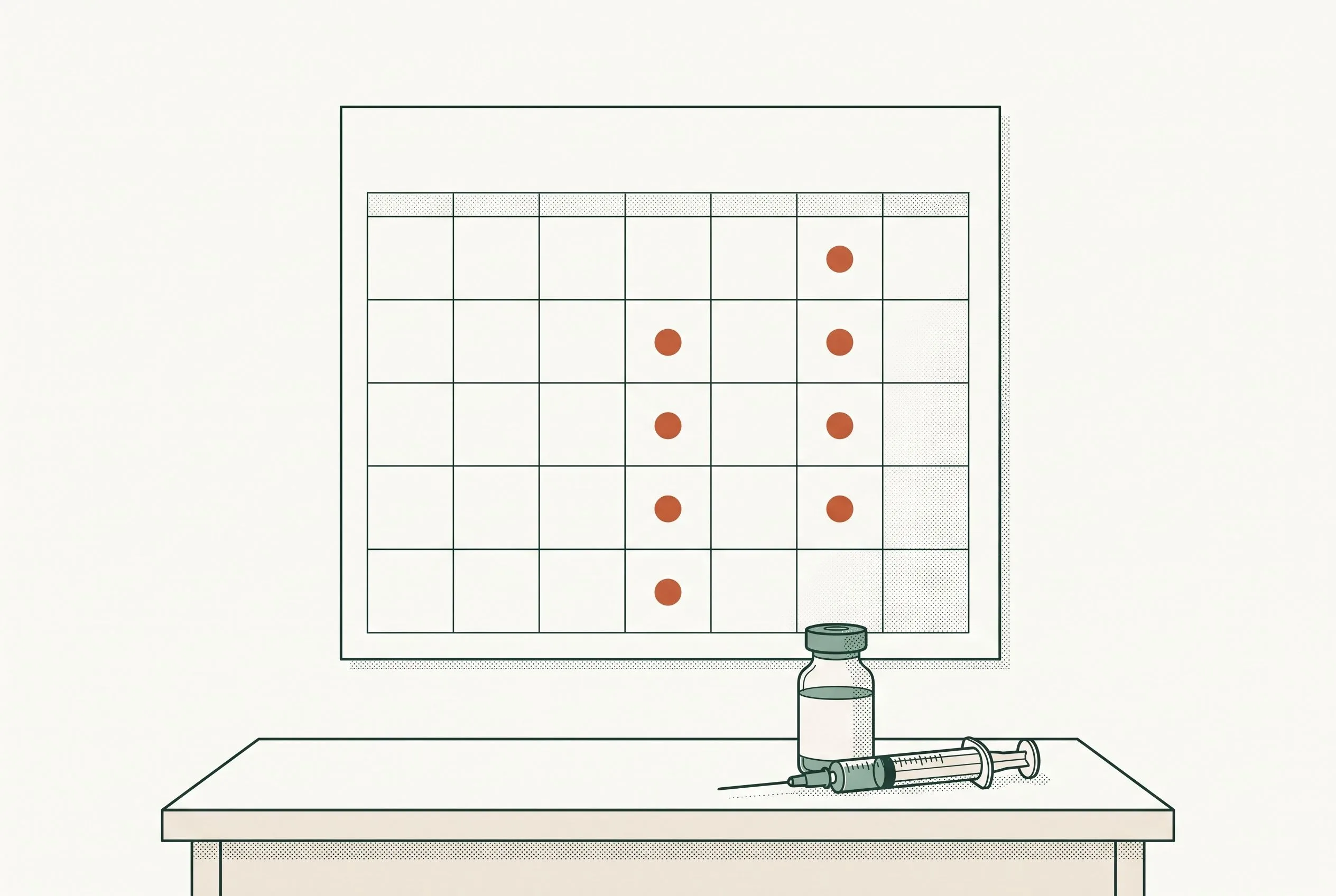
- Once a week, on the same day each week. Any time of day, with or without meals.
- Each dose
- Use one single-dose vial per dose, and a new syringe and needle every time. Draw up your full dose as you were trained.
- Where to inject
- Under the skin of your abdomen, thigh, or upper arm. Rotate to a different spot with each dose. (Injecting the upper arm needs another person’s help.)
- Check first
- The liquid should look clear and colorless to slightly yellow. Don’t use it if it’s cloudy, discolored, or has particles in it.
- Sharps
- Put used syringes and needles straight into a sharps disposal container — never in household trash. Never share needles or syringes.
- Your dose
- Your dose increases gradually as your prescriber directs. Don’t change your dose on your own.
- Missed dose
- If you miss a dose, take it within 4 days. If more than 4 days have passed, skip it and take your next dose on your regular day. You can change your weekly day as long as doses are at least 3 days apart.
Storing your vials
- Keep vials in the refrigerator (36–46°F / 2–8°C) and protect them from light.
- Do not freeze. Don’t use a vial that has been frozen.
- If needed, a vial can stay at room temperature (up to 86°F / 30°C) for up to 21 days total. After that, throw it away.
- For travel, keep vials cool and out of direct light; a cooler bag with ice packs helps on longer trips. Don’t let them freeze against ice packs.
What to expect
Weight change is gradual. It typically begins over the first weeks and continues over months as your prescriber adjusts your dose. In the SURMOUNT-1 / SURMOUNT-5 (Eli Lilly) trials, adults taking Zepbound alongside a reduced-calorie diet and more activity lost up to about 22% of their starting weight on average, depending on dose. Alongside the scale, many people notice they feel full sooner, feel hungry less often, and have fewer food cravings.
Stomach-related side effects are most common in the first several weeks and after each dose increase, then usually settle. Nausea, diarrhea, and vomiting often ease within about a week of starting; constipation can last longer for some people.
Plan on the long term
Side effects and how to manage them
The most common side effects are stomach-related: nausea, diarrhea, constipation, vomiting, indigestion, decreased appetite, and burping. Some people notice injection-site redness or itching, and some notice hair thinning. Most of these are mild to moderate and tend to improve with time.
Easing nausea
- Eat smaller meals more often, and eat slowly.
- Go easy on high-fat, fried, and spicy foods; limit alcohol and fizzy drinks.
- A small breakfast can help — nausea is often worse on an empty stomach. Ginger or peppermint tea helps some people.
Constipation, diarrhea, and heartburn
- Constipation: drink fluids and include fiber from food. Ask your care team before adding a stool softener or laxative.
- Diarrhea: avoid large, high-fat meals; ask your care team about options for relief.
- Heartburn: keep portions smaller and avoid lying down for 2–3 hours after eating.
Protecting your body while you lose weight
- Hydration: aim for plenty of water through the day. This medicine can lower your sense of thirst, so drink on a schedule rather than waiting to feel thirsty.
- Protein and strength: getting enough protein (about 80–120 grams a day) and doing strength exercise 2–3 times a week helps protect muscle as you lose weight.
- Hair thinning is usually temporary and linked to rapid weight loss rather than the medicine itself. Talk to your care team if it concerns you.
Staying safe on Zepbound
Boxed warning — thyroid tumors
Zepbound carries a boxed warning about a type of thyroid tumor seen in animal studies. Do not use Zepbound if you or a family member has had medullary thyroid cancer (MTC), or if you have Multiple Endocrine Neoplasia syndrome type 2 (MEN 2). Watch for a lump or swelling in the neck, trouble swallowing, ongoing hoarseness, or shortness of breath (see the next section).
Before any surgery or procedure with sedation
Because Zepbound slows how quickly your stomach empties, food can stay in your stomach longer than usual. Tell every provider — your surgeon, anesthesiologist, dentist, and the team doing any procedure with sedation — that you take Zepbound well ahead of time. Guidance on whether to pause the medicine before a procedure is still evolving and differs between medical groups, so let your care team make that plan with you rather than adjusting on your own.
Birth control and pregnancy
- Zepbound can make birth control pills less effective. Use a non-pill method (such as an IUD, implant, patch, or ring), or add a barrier method such as condoms, for 4 weeks after you start and for 4 weeks after each dose increase.
- Zepbound is not for use during pregnancy and may harm a developing baby. If you are pregnant, think you may be, or are planning a pregnancy, tell your prescriber — including about the right timing to stop beforehand.
Other things to tell your care team
- All your medicines. Because Zepbound slows stomach emptying, it can affect how some pills are absorbed. Certain medicines — such as blood thinners and thyroid medicine — may need closer monitoring.
- Diabetes medicines. If you take insulin or a sulfonylurea, your blood sugar could go too low; your prescriber may adjust those doses.
- If you have diabetic eye disease, rapid improvement in blood sugar can temporarily affect the eyes — keep your scheduled eye exams.
- Serious allergic reactions to tirzepatide have happened. Don’t use Zepbound if you’ve had one.
- Stay hydrated when you have vomiting or diarrhea — losing too much fluid can strain the kidneys.
When to get help
Use this guide to decide how quickly to act. When in doubt about a severe symptom, treat it as an emergency.
- Signs of a severe allergic reaction: trouble breathing; swelling of the face, lips, tongue, or throat; rapid heartbeat; severe rash; or feeling faint.
- Severe stomach pain, especially pain that spreads to your back, with or without vomiting.
- Signs of a bowel blockage: severe belly pain, a swollen belly, being unable to pass gas or stool, and ongoing vomiting.
- Signs of severe dehydration: very little or dark urine, dizziness or fainting, or confusion after a lot of vomiting or diarrhea.
- Sudden vision loss in one eye.
- Vomiting that won’t stop (more than 24 hours) or not being able to keep fluids down.
- Severe or worsening belly pain that isn’t helped by adjusting what you eat.
- Pain in the upper-right part of your belly, especially after meals.
- Signs of low blood sugar — shakiness, sweating, confusion, fast heartbeat — especially if you take insulin or a sulfonylurea.
- New vision changes, such as blurred vision or changes in your field of view.
- A lump or swelling in the neck, ongoing hoarseness, or trouble swallowing or breathing.
- Mild-to-moderate nausea, diarrhea, or constipation that you can manage but that keeps up.
- Hair thinning or more shedding than usual.
- Injection-site redness, itching, or mild swelling.
- Heartburn, or fatigue and lower energy.
- Questions about dose timing, a missed dose, or storage.
In a medical emergency, call 911 or go to the nearest emergency room for severe or life-threatening symptoms.
Educational information only
This guide is for education and does not replace your prescriber’s instructions or the Zepbound Medication Guide and Instructions for Use that comes with your medication. Please read that guide and follow the directions from your care team, which are tailored to you. Medication labeling can change — your Medication Guide is the most current source for your specific product.
Questions about your care
For non-urgent questions, sign in to your Imbue patient portal and send a secure message to your care team. Please don’t use the portal for emergencies.
Clinical review
Clinical content reviewed by Dr. Prajeet Reddy, MD, Medical Director (Cyane Medical Group California PC). Last reviewed July 14, 2026.
Imbue Health · Patient education · Last reviewed July 14, 2026