Lifestyle
Alcohol and GLP-1s: What You Need to Know
Last clinically reviewed: July 16, 2026 by Dr. Prajeet Reddy, MD (Medical Director)
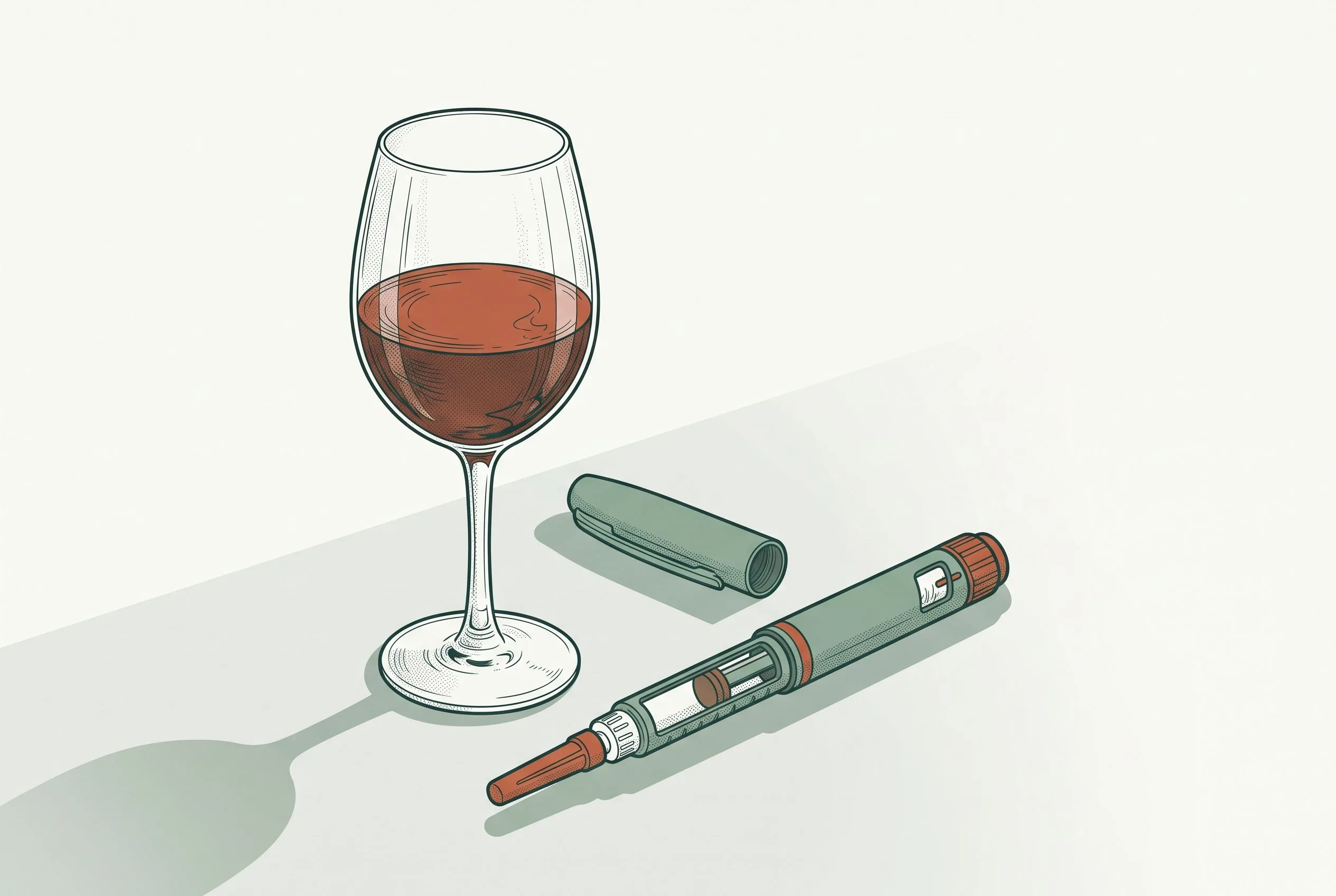
This guide is for patients taking a GLP-1 receptor agonist medication, such as semaglutide (Wegovy, Ozempic, Rybelsus), tirzepatide (Zepbound, Mounjaro), liraglutide (Saxenda, Victoza), or dulaglutide (Trulicity). It explains what you should know about drinking alcohol while on these treatments.
Is It Safe to Drink Alcohol on My GLP-1 Medication?
Alcohol is not strictly prohibited while taking a GLP-1 medication, but moderation is strongly recommended. The American Diabetes Association (ADA) and the European Association for the Study of Diabetes (EASD) specifically recommend moderating alcohol intake when starting GLP-1 therapy to help manage side effects.[1] Drinking alcohol can worsen the side effects of your medication and may interfere with your treatment goals. Talk to your healthcare provider about what amount, if any, is appropriate for you.
How Can Alcohol Affect My Side Effects?
GLP-1 medications commonly cause stomach-related side effects, especially when you first start or when your dose is increased. These include:
- Nausea (reported in 33–44% of patients)
- Vomiting (11–25%)
- Diarrhea or constipation (23–31%)
- Heartburn (acid reflux)
- Bloating and stomach pain (9–20%)[2]
These symptoms are usually worst during the first several weeks of treatment and tend to improve over time.[3][4] Alcohol can irritate the stomach and make these side effects worse. If you are already experiencing nausea or stomach upset from your medication, drinking alcohol may make you feel significantly more uncomfortable.
Can Alcohol Affect My Blood Sugar?
If you are taking a GLP-1 medication for type 2 diabetes, alcohol can affect your blood sugar in unpredictable ways:
- Alcohol can cause blood sugar to drop (hypoglycemia), especially if you drink on an empty stomach or skip meals.
- The risk of low blood sugar is higher if you also take insulin or a sulfonylurea (such as glipizide or glimepiride) along with your GLP-1 medication. The American College of Cardiology notes that hypoglycemia risk is increased when GLP-1 medications are combined with these drugs.[5]
- Symptoms of low blood sugar — dizziness, shakiness, confusion, sweating — can be mistaken for the effects of alcohol, making it harder to recognize and treat a low.
- When GLP-1 medications are used alone (without insulin or sulfonylureas), hypoglycemia is uncommon.[3]
If you do not have diabetes and are taking your GLP-1 medication for weight management, the risk of low blood sugar from alcohol is much lower, but you should still be cautious.
What About Pancreatitis?
Pancreatitis (inflammation of the pancreas) is a rare but serious condition. Heavy alcohol use is a well-known major risk factor for pancreatitis. Regarding GLP-1 medications specifically, evidence from large long-term clinical trials does not show a significant increase in pancreatitis risk compared to placebo.[3][6] A large multicenter study also found that GLP-1 medication use did not increase the risk of acute pancreatitis in patients with type 2 diabetes.[7] However, combining heavy alcohol use with any medication that affects the pancreas is not advisable.
Seek immediate medical attention if you develop severe, persistent abdominal pain that may radiate to your back, especially with nausea and vomiting.
Alcohol and Your Treatment Goals
Alcoholic drinks are high in calories and can work against your weight loss and blood sugar goals. A single glass of wine or beer can contain 100–200 calories, and mixed drinks with sugary mixers can contain even more. Alcohol can also lower your willpower around food choices, leading to overeating.
Practical Tips If You Choose to Drink
- Limit yourself to no more than one drink per day for women or two drinks per day for men (one drink = 12 oz beer, 5 oz wine, or 1.5 oz spirits).
- Never drink on an empty stomach — always eat a meal or snack first.
- Drink water between alcoholic beverages to stay hydrated.
- Avoid sugary cocktails and mixers.
- Monitor your blood sugar more frequently if you have diabetes, especially before bed after drinking.
- Be aware that your tolerance for alcohol may change while on this medication — many patients report feeling the effects of alcohol more quickly or with less alcohol than before.
- If you experience significant nausea or vomiting from your medication, avoid alcohol until these symptoms improve. Dietary strategies such as eating smaller meals and avoiding high-fat and spicy foods can also help manage these side effects.[1]
When to Call Your Doctor
Contact your healthcare provider if you:
- Experience severe or worsening nausea, vomiting, or stomach pain after drinking
- Have symptoms of low blood sugar that do not improve after eating or drinking something sugary
- Develop severe abdominal pain that does not go away
- Find it difficult to control your alcohol intake and would like help
A Note About Changes in Alcohol Cravings
Some patients notice that their desire to drink alcohol decreases after starting a GLP-1 medication. Research has shown that GLP-1 medications, particularly semaglutide, may reduce alcohol cravings, the number of drinks consumed per drinking day, and heavy drinking days.[8] A systematic review and meta-analysis also found that GLP-1 medications were associated with reduced alcohol-related events and lower AUDIT (Alcohol Use Disorders Identification Test) scores.[9] Researchers are actively studying these effects. If you notice this change, it is normal and not a cause for concern. However, do not stop any prescribed treatments for alcohol use without first speaking with your doctor.
Frequently asked questions
Can I drink alcohol on Wegovy or Zepbound?
In moderation, usually yes — alcohol isn't strictly prohibited, but the ADA/EASD recommend moderating intake when starting GLP-1 therapy. Limit yourself to one drink per day (women) or two (men), never drink on an empty stomach, and avoid alcohol entirely while you're experiencing nausea or during dose increases. Confirm what's appropriate for you with your provider.
Does alcohol make GLP-1 side effects worse?
It can. Alcohol irritates the stomach, and GLP-1 stomach side effects (nausea in 33–44% of patients, vomiting, reflux) are already most intense in the first weeks and after dose increases. If you're feeling queasy from your medication, drinking will likely make it significantly worse.
Does drinking on a GLP-1 raise pancreatitis risk?
Heavy alcohol use is a major pancreatitis risk factor on its own. Large trials and multicenter studies have not shown GLP-1s significantly increase pancreatitis risk — but combining heavy drinking with any medication affecting the pancreas is not advisable. Seek immediate care for severe, persistent abdominal pain radiating to your back.
Why don't I want to drink since starting my GLP-1?
That's a real, studied effect: research shows GLP-1 medications — particularly semaglutide — may reduce alcohol cravings, drinks per drinking day, and heavy drinking days. It's normal and not a cause for concern, but don't stop any prescribed alcohol-use treatment without talking to your doctor.
Sources
- Management of Hyperglycemia in Type 2 Diabetes — ADA/EASD Consensus Report, Diabetes Care 2022
- Nutritional Priorities to Support GLP-1 Therapy for Obesity — Joint Advisory, Am J Clin Nutr 2025
- GLP-1 Receptor Agonists — Rosen & Ingelfinger, NEJM 2026
- GI adverse events with GLP-1 receptor agonists — Horowitz et al., Diabetes Obes Metab 2017
- 2020 ACC Expert Consensus Decision Pathway on Novel Therapies for CV Risk Reduction in T2D — JACC 2020
- Risk of Acute Pancreatitis After Initiation of Incretin-Based Medications — Diabetes Care 2025
- GLP-1 RA Use Does Not Increase Risk for Acute Pancreatitis: Multicenter Analysis — Am J Gastroenterol 2025
- Once-Weekly Semaglutide in Adults With Alcohol Use Disorder: A Randomized Clinical Trial — JAMA Psychiatry 2025
- GLP-1 RAs and Alcohol Consumption: Systematic Review and Meta-Analysis — EClinicalMedicine 2025
This article is for education and does not replace your prescriber’s instructions or the FDA Medication Guide that comes with your medication. Clinical content reviewed by Dr. Prajeet Reddy, MD, Medical Director (Cyane Medical Group California PC).
$29/mo membership — the lowest in GLP-1 telehealth. No contracts.