Safety
Gallbladder Problems on GLP-1s: Warning Signs
Last clinically reviewed: July 21, 2026 by Dr. Prajeet Reddy, MD (Medical Director)
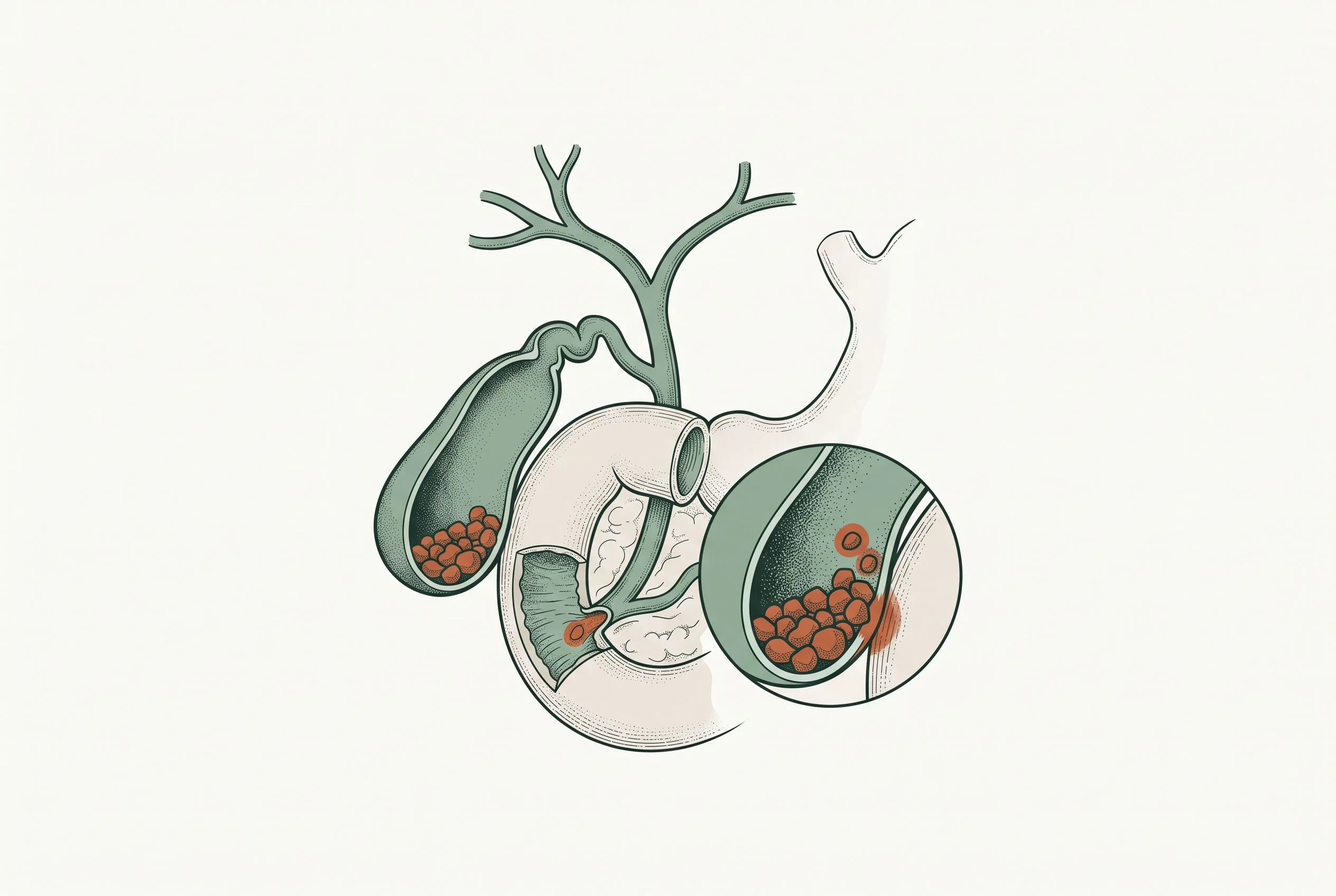
The gallbladder is a small organ beneath the liver that stores bile, which helps digest fats. Gallstones are hard deposits that can form inside it — 10% to 15% of US adults are affected.[1] Most gallstones cause no symptoms, but when they block the flow of bile they can cause sudden, severe pain and serious problems.
Why Rapid Weight Loss Increases Gallstone Risk
When you lose weight quickly, your liver releases extra cholesterol into bile, and your gallbladder may not empty as often as it should — both make stones easier to form.[2] Research shows:
- Losing weight faster than about 3 pounds (1.5 kg) per week increases risk.[3]
- Losing more than 24% of your starting body weight is a risk factor.[3]
- Very low-calorie, very low-fat diets are especially risky because the gallbladder doesn't contract without some dietary fat. In one study, 4 of 6 people on a very low-fat diet developed gallstones, versus none on a diet with a small amount of fat.[2]
- After rapid weight loss, 10–30% of people may develop new gallstones, and about one-third of those will have symptoms.[3]
How GLP-1 Medications Affect Gallbladder Risk
GLP-1 receptor agonists — semaglutide (Ozempic, Wegovy), liraglutide (Saxenda, Victoza), and tirzepatide (Mounjaro, Zepbound) — can slow gallbladder emptying and, combined with the weight loss they produce, may increase the chance of gallstones.
A review of 76 trials found people taking GLP-1s had a 37% higher relative risk of gallbladder or biliary problems.[4] A separate review of 55 trials confirmed a 46% higher risk of gallstones specifically.[5] The risk is higher with higher doses and longer use. While the overall chance of a serious gallbladder problem remains small (roughly 27 extra cases per 10,000 patients per year), it's important to know the symptoms.[4]
Symptoms That Need Prompt Medical Attention
Contact your doctor right away or go to the emergency room if you experience:[1]
- Sudden, intense pain in the upper-right abdomen or center, just below the breastbone
- Pain that lasts more than a few hours or is getting worse
- Pain that spreads to your right shoulder or back between the shoulder blades
- Nausea or vomiting with abdominal pain
- Fever or chills with abdominal pain
- Yellowing of the skin or eyes (jaundice)
- Dark-colored urine or pale-colored stools
Gallstone pain often comes on suddenly, may follow a fatty meal, and can occur at night. A simple episode (biliary colic) usually resolves within 5 hours; pain beyond 6 hours may indicate cholecystitis (gallbladder inflammation).[1] If pain goes away but keeps coming back, still let your doctor know.
What You Can Do to Lower Your Risk
- Aim for gradual weight loss. Losing 1–2 pounds per week is generally safer for your gallbladder.[3]
- Don't skip meals or fast for long periods. Going many hours without eating lets bile sit and form stones.[3]
- Include a small amount of healthy fat at each meal (olive oil, nuts, avocado). As little as 10 grams of fat per meal can maintain normal gallbladder emptying during weight loss.[2]
- Eat plenty of fiber — fruits, vegetables, and whole grains support healthy digestion and may reduce gallstone risk.
- Stay in touch with your doctor, especially during the first year of rapid weight loss or after starting a GLP-1. Your doctor may recommend an ultrasound or a preventive medication called ursodiol. In clinical trials, ursodiol (600 mg/day) reduced gallstone formation from 23% to 3% during rapid weight loss.[6]
When to Talk to Your Doctor
- Before starting any very low-calorie diet or weight loss program
- If you're starting or taking a GLP-1 and have questions about gallbladder risk
- If you have a history of gallstones or gallbladder problems
- If you develop any of the warning symptoms above
Your health care team is here to help you lose weight safely. Do not stop any prescribed medication without talking to your doctor first.
Frequently asked questions
Do GLP-1s cause gallbladder problems?
They can modestly increase the risk. GLP-1s slow gallbladder emptying, and the rapid weight loss they produce raises cholesterol in bile — both make gallstones more likely. A review of 76 trials found a 37% higher relative risk of gallbladder/biliary problems, and a review of 55 trials found a 46% higher risk of gallstones. The absolute risk stays small — roughly 27 extra cases per 10,000 patients per year — and is higher with higher doses and longer use.
What are the warning signs of a gallbladder problem?
Get medical attention right away for sudden, intense pain in the upper-right abdomen or center just below the breastbone; pain lasting more than a few hours or worsening; pain spreading to your right shoulder or back; nausea or vomiting with the pain; fever or chills; yellowing of the skin or eyes (jaundice); or dark urine and pale stools. Gallstone pain often comes on suddenly, may follow a fatty meal, and can occur at night.
How can I lower my gallstone risk on a GLP-1?
Aim for gradual weight loss (1–2 lbs/week is safer for the gallbladder than very rapid loss); don't skip meals or fast for long periods, since that lets bile sit and form stones; include a small amount of healthy fat at each meal (even ~10 grams — olive oil, nuts, avocado) to help the gallbladder empty; eat plenty of fiber; and stay in touch with your doctor, who may recommend an ultrasound or a preventive medication called ursodiol.
Should I stop my GLP-1 if I'm worried about my gallbladder?
Don't stop any prescribed medication without talking to your doctor first. The overall chance of a serious gallbladder problem remains small. Tell your doctor if you have a history of gallstones, and seek care promptly for the warning symptoms above so any problem can be caught early.
Sources
- Gallstone Disease: Common Questions and Answers — Patel & Jepsen, Am Fam Physician 2024
- The Role of Gallbladder Emptying in Gallstone Formation During Rapid Weight Loss — Gebhard et al., Hepatology 1996
- Clinical Management of Obesity, Third Edition — The Obesity Society (2025)
- Association of GLP-1 RA Use With Gallbladder and Biliary Diseases: Meta-Analysis — He et al., JAMA Intern Med 2022
- GLP-1 RAs and Gastrointestinal Adverse Events: Systematic Review and Meta-Analysis — Chiang et al., Gastroenterology 2025
- URSODIOL Prescribing Information — DailyMed (FDA)
This article is for education and does not replace your prescriber’s instructions or the FDA Medication Guide that comes with your medication. Clinical content reviewed by Dr. Prajeet Reddy, MD, Medical Director (Cyane Medical Group California PC).
$29/mo membership — the lowest in GLP-1 telehealth. No contracts.