Side effects
"Ozempic Face" and Loose Skin: What Rapid Weight Loss Does
Last clinically reviewed: July 21, 2026 by Dr. Prajeet Reddy, MD (Medical Director)
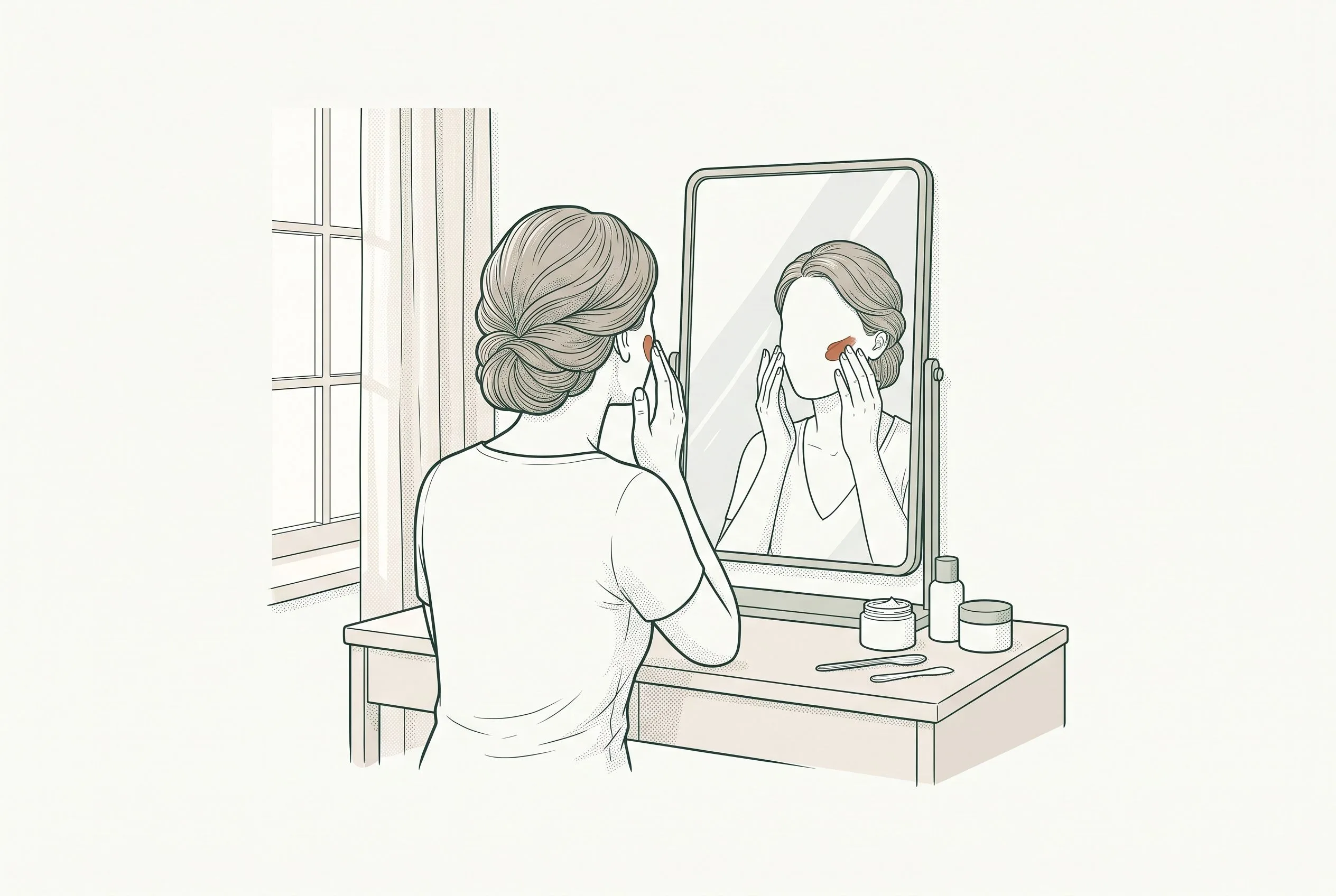
When you lose weight — especially quickly — your body loses fat from many areas, including your face. The face has many small fat pockets that give it a full, youthful shape. As they shrink, you may notice:[1][2]
- Hollow-looking cheeks or temples
- More visible lines and folds (such as smile lines)
- Looser or sagging skin on the face, jawline, or neck
- An overall "older" or more tired appearance
These changes happen because the skin and deeper tissues can't always bounce back as fast as fat is lost — collagen and elastin, the proteins that keep skin firm, can become weakened or disorganized during rapid weight loss. They're common, not a sign anything is medically wrong, and can occur with any rapid weight loss (medications, bariatric surgery, or intensive dieting).[2]
How to Protect Your Skin and Face During Weight Loss
1. Get enough protein
Protein maintains muscle mass and supports collagen. During weight loss, your body needs more than usual to protect muscle and skin.[3]
- Aim for about 1.2–1.6 grams per kilogram of body weight per day, or 80–120 grams per day.
- Good sources: lean meats, fish, eggs, dairy, beans, lentils, tofu.
- Eat protein at every meal and snack, and eat protein first if your appetite is reduced.[3]
2. Stay well hydrated
Dehydration worsens skin dryness and reduces elasticity. On an appetite-reducing medication you may drink less without realizing it — make a conscious effort to stay hydrated.[6]
3. Prioritize resistance (strength) training
Losing muscle contributes to a gaunt face and loss of body tone. Resistance training helps preserve muscle — research shows it can prevent up to about 93% of lean-mass loss compared with dieting alone.[4]
- Aim for resistance training 2–3 times per week.[5]
- Combine with 150 minutes per week of moderate aerobic activity for the best overall results.[5]
- If new to exercise, start slowly and build up.
4. Ensure adequate vitamins and minerals
Certain nutrients support skin health and collagen:[7]
- Vitamin C (citrus, berries, peppers, broccoli) is essential for collagen production; higher intake is associated with better skin appearance.[7]
- Zinc (meat, shellfish, seeds, nuts) supports skin repair.
- Iron and vitamin B12 are important for tissue health, especially with appetite-suppressing medications.
Ask your doctor whether you need blood tests to check for deficiencies.
5. Protect your skin from the sun
Sun damage breaks down collagen and elastin, worsening skin laxity. Use broad-spectrum SPF 30+ daily, wear a hat outdoors, and avoid prolonged sun exposure.
6. Consider a quality skincare routine
Topicals with growth factors, peptides, retinoids, vitamin C, or botanical extracts may support skin quality and firmness over time.[6] Ask your dermatologist which are right for you.
Professional Treatments
If facial changes are significant or bothersome, discuss these with a qualified dermatologist or plastic surgeon:
- Collagen-stimulating injectables (such as poly-L-lactic acid) encourage new collagen production over time.[1][8]
- Hyaluronic acid fillers restore volume to hollowed cheeks, temples, and jawline; combining them with collagen-stimulating agents can improve contour and skin quality.[8]
- Energy-based devices (radiofrequency, microfocused ultrasound) tighten skin by stimulating collagen without surgery.
- Fat grafting moves fat from another part of your body to restore facial volume.[2]
- Surgical options such as a facelift may be considered for significant skin excess.[2]
These are typically elective, may not be covered by insurance, and results vary — multiple sessions may be needed.
Key Takeaways
- Facial volume loss and skin laxity are common during rapid weight loss and aren't harmful to your health.
- Eating enough protein, staying hydrated, doing resistance exercise, and protecting your skin from the sun are the most important steps.[3][4]
- Talk to your doctor or dermatologist if facial changes bother you — effective treatments exist.
- Gradual, steady weight loss (when possible) may give your skin more time to adapt.
When to Talk to Your Doctor
- Significant skin sagging, rashes, or irritation in skin folds
- Difficulty eating enough protein or staying nourished
- Interest in professional treatments for facial volume loss
- Hair loss, which can also occur during rapid weight loss
Frequently asked questions
What causes "Ozempic face"?
Rapid weight loss removes fat from all over the body, including the small fat pockets that give the face a full, youthful shape. As those shrink, cheeks and temples can look hollow and skin can sag, because the proteins that keep skin firm — collagen and elastin — can't bounce back as fast as the fat is lost. It's not specific to Ozempic; it happens with any rapid weight loss, including surgery and dieting.
Can I prevent loose skin and facial changes on a GLP-1?
You can reduce them. The most effective steps are eating enough protein (about 1.2–1.6 g per kg of body weight, or 80–120 g/day), doing resistance training 2–3 times a week to preserve muscle (which supports facial fullness and body tone), staying well hydrated, getting enough vitamin C and zinc for collagen, and protecting your skin from the sun with daily SPF 30+. Gradual, steady weight loss also gives skin more time to adapt.
Does exercise help with facial and skin changes?
Yes. Losing muscle contributes to a gaunt facial appearance and overall loss of tone, and resistance training helps preserve muscle during weight loss — research shows it can prevent up to about 93% of lean-mass loss compared with dieting alone. Aim for resistance training 2–3 times weekly plus 150 minutes of moderate aerobic activity.
What professional treatments are available for facial volume loss?
If changes are significant or bothersome, a dermatologist or plastic surgeon may offer collagen-stimulating injectables (like poly-L-lactic acid), hyaluronic acid fillers to restore volume, energy-based devices (radiofrequency or microfocused ultrasound) for skin tightening, fat grafting, or — for significant skin excess — surgery such as a facelift. These are typically elective, may not be covered by insurance, and often need multiple sessions.
Sources
- GLP-1-Induced Weight Loss and the Face: Anatomical Mechanisms — Frank et al., Dermatol Surg 2026
- Weight Loss and Its Impact on Soft Tissue — Fathizadeh et al., J Drugs Dermatol 2026
- Nutritional Priorities to Support GLP-1 Therapy for Obesity — Joint Advisory, Am J Clin Nutr 2025
- Role of Physical Activity in Obesity Treatment: AHA Scientific Statement — Swift et al., Circulation 2026
- Integrating Diet and Physical Activity When Prescribing GLP-1s — Mehrtash et al., JAMA Intern Med 2025
- The Potential Role of Topical Skincare After GLP-1 RA Use and Rapid Weight Loss — Shridharani et al., Dermatol Surg 2026
- Dietary Nutrient Intakes and Skin-Aging Appearance — Cosgrove et al., Am J Clin Nutr 2007
- Combined Poly-L-Lactic Acid and Hyaluronic Filler in GLP-1 Medication Users — Lorenc et al., Aesthet Surg J 2026
This article is for education and does not replace your prescriber’s instructions or the FDA Medication Guide that comes with your medication. Clinical content reviewed by Dr. Prajeet Reddy, MD, Medical Director (Cyane Medical Group California PC).
$29/mo membership — the lowest in GLP-1 telehealth. No contracts.