Dosing
Zepbound Dosage Schedule: Tirzepatide Titration Explained
Last clinically reviewed: July 16, 2026 by Dr. Prajeet Reddy, MD (Medical Director)
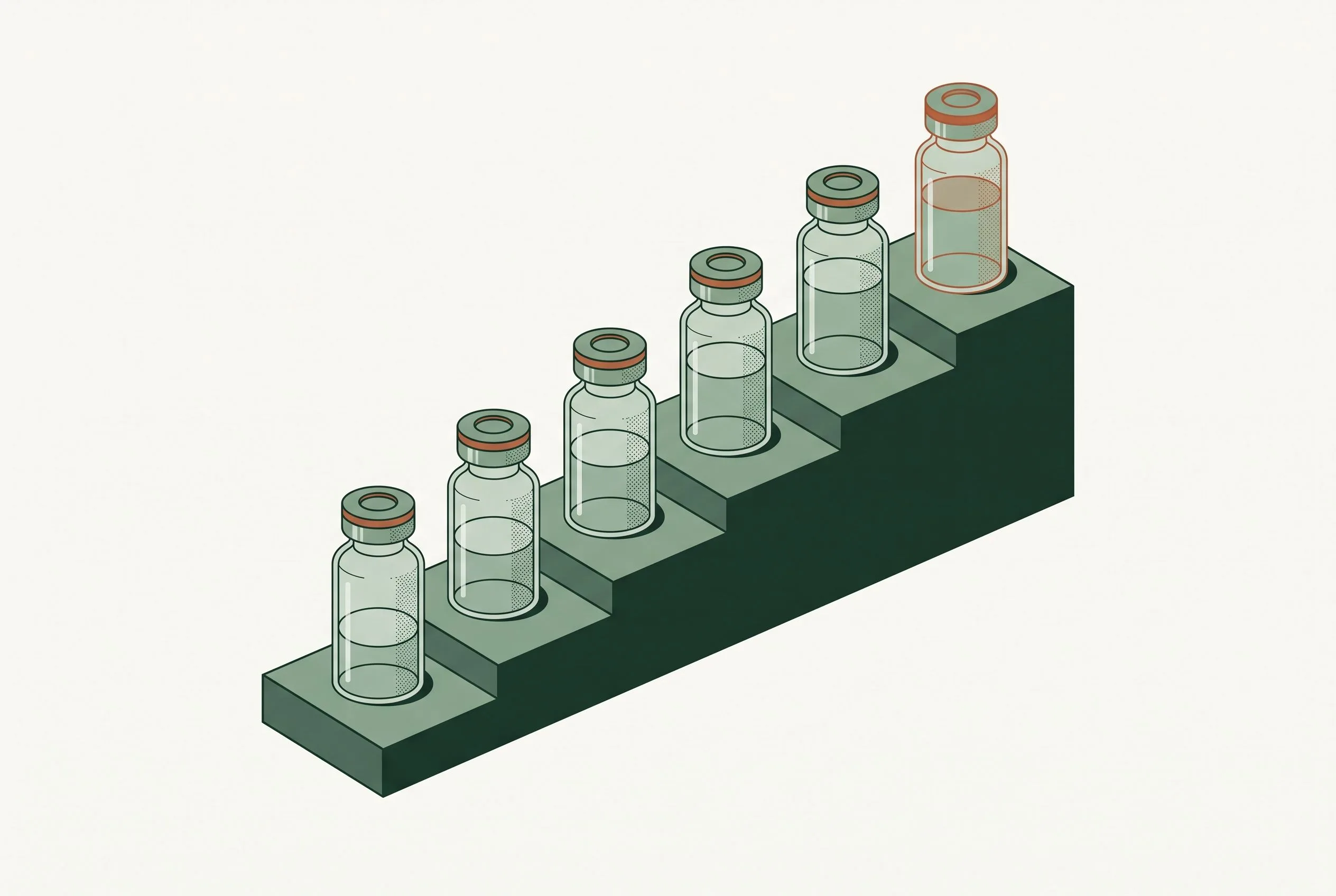
Zepbound (tirzepatide) is an FDA-approved, once-weekly injectable medication used along with a reduced-calorie diet and increased physical activity to help adults with obesity — or overweight with a weight-related health condition — lose weight and keep it off.
How the Dose Is Increased (Dose Escalation)
Your dose starts low and is gradually increased over several weeks. This slow increase helps your body adjust and reduces the chance of stomach-related side effects like nausea.[1]
| Weeks | Weekly Dose | Purpose |
|---|---|---|
| Weeks 1–4 | 2.5 mg | Starting dose (not a long-term dose) |
| Weeks 5–8 | 5 mg | First maintenance dose option |
| Weeks 9–12 | 7.5 mg | Transitional dose (if increasing) |
| Weeks 13–16 | 10 mg | Second maintenance dose option |
| Weeks 17–20 | 12.5 mg | Transitional dose (if increasing) |
| Week 21 onward | 15 mg | Highest (maximum) maintenance dose |
Important: each dose increase happens after at least 4 weeks on the current dose. Your provider will decide when — and whether — to increase your dose based on how well the medication is working and how you are tolerating it.
Choosing Your Maintenance Dose
Not everyone needs the highest dose. Your provider will work with you to find the right long-term (maintenance) dose. The approved maintenance doses are:
- 5 mg per week — may be enough if you are responding well and tolerating the medication
- 10 mg per week — a common maintenance dose
- 15 mg per week — the maximum dose, for those who need additional weight loss
In the SURMOUNT-1 clinical trial, average weight loss at 72 weeks was approximately:[2]
- 15% of body weight with the 5 mg dose
- 19.5% with the 10 mg dose
- 21% with the 15 mg dose
The 3-year extension of SURMOUNT-1 confirmed sustained weight reduction (−12.3%, −18.7%, and −19.7% at 176 weeks for the 5, 10, and 15 mg doses, respectively) and a markedly lower risk of progression to type 2 diabetes.[3]
If you experience bothersome side effects at a higher dose, your provider may lower you back to a dose that is easier to tolerate.
How to Give Your Injection
- Inject once a week, on the same day each week.
- You can inject at any time of day, with or without food.
- Inject under the skin (subcutaneously) in your abdomen (belly) or thigh. A caregiver may also inject in the back of your upper arm.
- Rotate your injection site each week — do not inject in the same spot every time.
- The medication should look clear and colorless to slightly yellow. Do not use it if it looks cloudy, discolored, or has particles in it.
What If You Miss a Dose?
- If it has been 4 days (96 hours) or less since your missed dose: take it as soon as possible, then go back to your regular schedule.
- If it has been more than 4 days: skip the missed dose and take your next dose on the regularly scheduled day.
- You may change your injection day if needed, as long as there are at least 3 days (72 hours) between doses.
Common Side Effects
Most side effects are related to the stomach and intestines and tend to be mild to moderate. They are most common during the dose-escalation period and usually improve over time.
- Nausea
- Diarrhea
- Constipation
- Vomiting
- Stomach pain or heartburn
- Decreased appetite
- Fatigue
- Hair thinning (temporary)
- Burping
- Injection site reactions
Tips to reduce nausea:
- Eat smaller, more frequent meals.
- Avoid greasy, fried, or very rich foods.
- Stay well hydrated.
- Eat slowly and stop when you feel full.
When to Call Your Provider
Contact your healthcare provider right away if you experience:
- Severe or persistent stomach pain (could be a sign of pancreatitis)
- Signs of an allergic reaction: rash, swelling of the face/lips/tongue, difficulty breathing
- Symptoms of dehydration: dizziness, very dark urine, feeling faint
- Severe nausea, vomiting, or diarrhea that does not improve
- A lump or swelling in your neck, hoarseness, or trouble swallowing
Storage
- Store your pen in the refrigerator (36°F to 46°F / 2°C to 8°C).
- Single-dose pens can be kept at room temperature (up to 86°F / 30°C) for up to 21 days if needed.
- Do not freeze. If frozen, do not use.
- Keep in the original carton to protect from light.
Important Reminders
- Zepbound works best when combined with a healthy, reduced-calorie diet and regular physical activity (aim for at least 150 minutes per week).
- This is a long-term medication. Stopping it may lead to weight regain.
- If you use oral birth control pills, talk to your provider — Zepbound may reduce their effectiveness. A backup or non-oral method of contraception is recommended for 4 weeks after starting and after each dose increase.[1]
- Always attend your follow-up appointments so your provider can monitor your progress and adjust your dose.
Frequently asked questions
What are the maintenance doses of Zepbound?
The approved maintenance doses are 5 mg, 10 mg, and 15 mg once weekly. Not everyone needs the highest dose — 5 mg may be enough if you're responding well, 10 mg is a common maintenance dose, and 15 mg is the maximum for those who need additional weight loss.
What if I miss a Zepbound dose?
If it has been 4 days (96 hours) or less since the missed dose, take it as soon as possible and return to your regular schedule. If more than 4 days have passed, skip it and take your next dose on the regularly scheduled day. You can change your injection day as long as doses are at least 3 days (72 hours) apart.
How much weight do people lose at each Zepbound dose?
In the SURMOUNT-1 trial, average weight loss at 72 weeks was approximately 15% of body weight at 5 mg, 19.5% at 10 mg, and 21% at 15 mg. The 3-year extension showed sustained reductions and a markedly lower risk of progression to type 2 diabetes.
Does Zepbound affect birth control pills?
It can. Zepbound may reduce the effectiveness of oral contraceptives. A backup or non-oral method of contraception is recommended for 4 weeks after starting and for 4 weeks after each dose increase — talk to your provider.
This article is for education and does not replace your prescriber’s instructions or the FDA Medication Guide that comes with your medication. Clinical content reviewed by Dr. Prajeet Reddy, MD, Medical Director (Cyane Medical Group California PC).
$29/mo membership — the lowest in GLP-1 telehealth. No contracts.