Medications
GLP-1s and PCOS: What the Evidence Shows
Last clinically reviewed: October 10, 2026 by Dr. Prajeet Reddy, MD (Medical Director)
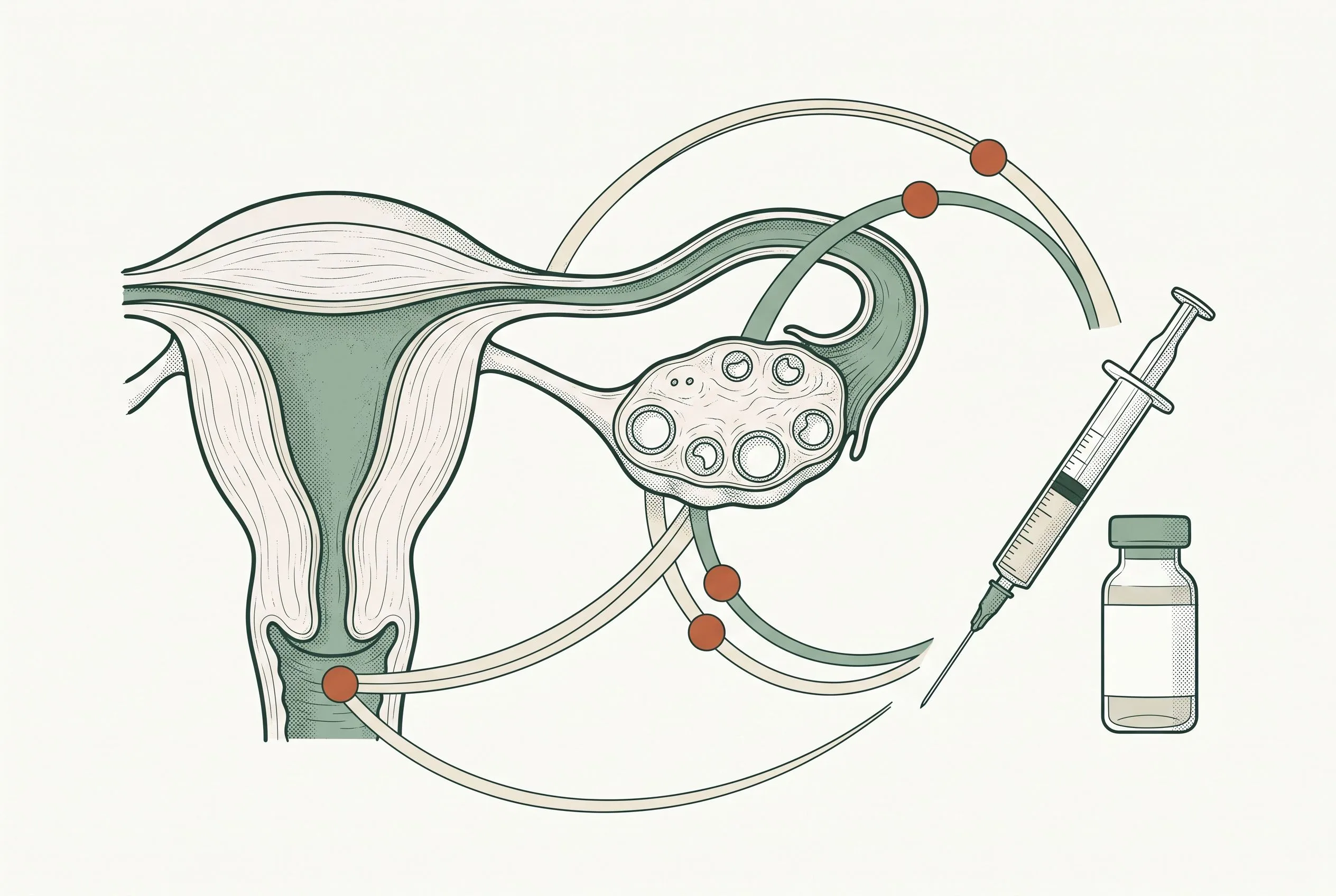
Polycystic ovary syndrome (PCOS) is a common hormone condition. Many women with PCOS carry extra weight and have insulin resistance, meaning the body has to make more insulin than normal to keep blood sugar steady. This can make weight harder to lose and can worsen PCOS symptoms.
This guide explains how GLP-1 medicines are used to help with weight and metabolic health in PCOS, and what the research does and does not show.
What GLP-1 Medicines Are
GLP-1 medicines copy a natural gut hormone your body makes after eating. They help you feel full sooner, slow how fast the stomach empties, and reduce appetite. This usually leads to eating less and losing weight.
Common examples:
- Semaglutide (Wegovy, Ozempic)
- Tirzepatide (Zepbound, Mounjaro), a closely related "dual" medicine
- Liraglutide (Saxenda, Victoza)
Most are given as a small injection under the skin, once a week or once a day depending on the medicine. Semaglutide also comes as a daily tablet.
No GLP-1 medicine is approved specifically for PCOS. When used in PCOS, they are prescribed for weight management, alongside healthy eating and physical activity. The 2023 international PCOS guideline lists them as an option for managing higher weight in adults with PCOS.[1]
What the Research Shows in PCOS
The strongest evidence so far is for liraglutide, with growing data for semaglutide. There is still very little PCOS-specific research on tirzepatide.[2] Most studies have been small and lasted only 3 to 8 months, so treat the results as promising, not final.
| Outcome | What studies show |
|---|---|
| Weight | More weight loss than lifestyle changes alone or metformin |
| Insulin and blood sugar | Often better insulin resistance and lower insulin levels; results vary |
| Hormones and periods | Lower testosterone and more regular periods in some women |
| With metformin | The combination often works better than either one alone |
Weight. Across studies, women with PCOS lost roughly 3–6 kg (about 7–13 lb) over 3–8 months, more than with lifestyle changes alone or with metformin.[3] In a randomized trial of liraglutide 3 mg, women lost an average of 5.7% of their body weight over 32 weeks, compared with 1.4% on placebo.[4] In a small study of 27 women taking low-dose semaglutide, average weight loss was about 7.6 kg at 3 months, and about 8 in 10 lost at least 5% of their body weight. Those who continued lost about 11.5 kg on average by 6 months.[6]
Insulin and blood sugar. GLP-1 medicines often improve insulin resistance and lower insulin levels, though results have varied between studies.[3][5]
Hormones and periods. Some studies show lower testosterone (a hormone that is often high in PCOS) and more regular menstrual periods, especially in women who lose weight.[5] These benefits are encouraging, but they do not happen for everyone.
Combination with metformin. Taking a GLP-1 medicine together with metformin often works better than either one alone for weight, blood sugar, and hormone levels.[2]
Fertility and Pregnancy: Read This Even If Pregnancy Is Not Your Goal
- These medicines can make you more fertile. By helping with weight and restoring more regular periods, they can bring ovulation back, sometimes in women who thought they could not get pregnant easily. Pregnancy can happen unexpectedly.[7]
- GLP-1 medicines are not considered safe in pregnancy and should be stopped before trying to conceive.
- Use reliable contraception while taking a GLP-1 medicine if you do not want to become pregnant.[1]
- Stop the medicine as soon as pregnancy is known, and call your clinician. Studies of women who became pregnant by accident while on these medicines have not found a clear increase in birth defects.
Typical timing before a planned pregnancy:
| Medicine | When to stop |
|---|---|
| Semaglutide | At least 2 months before trying to conceive |
| Tirzepatide | At least 1 month before; some clinicians advise about 2 months |
| Liraglutide | About 2 weeks before |
Your prescriber will set the exact timing for you. Full detail: GLP-1s and pregnancy.
If you use birth control pills and take tirzepatide, the pill may not be fully absorbed. Add a backup method such as condoms, or switch to a non-pill method such as an IUD, implant, or injection, for 4 weeks after starting and for 4 weeks after each dose increase.[8] More: birth control during GLP-1 dose escalation.
Common Side Effects
Most side effects involve the stomach and gut, especially when first starting or increasing the dose:[10]
- Nausea (most common)
- Vomiting
- Diarrhea or constipation
- Bloating or stomach discomfort
- Dizziness
These are usually mild and improve over the first few weeks to months. Starting at a low dose and increasing slowly helps a lot. Smaller meals, avoiding greasy or very large meals, and staying hydrated also help. More: how to manage nausea on GLP-1 medications.
Less Common but Important Risks
- Gallbladder problems (gallstones) can occur, partly because of rapid weight loss. Tell your clinician about severe pain in the upper-right belly, especially with fever or yellowing of the skin or eyes. See gallbladder problems on GLP-1s.
- Pancreatitis (inflammation of the pancreas) is rare and not clearly proven to be caused by these medicines, but severe, persistent belly pain, often spreading to the back, should be reported right away.[10] See pancreatitis and GLP-1s.
- Thyroid warning. These medicines carry a warning about a rare thyroid cancer seen in animal studies. Tell your clinician about any neck lump, trouble swallowing, or lasting hoarseness.
- Increased heart rate can occur.
When These Medicines Should Not Be Used
Do not use GLP-1 medicines if you:
- Are pregnant, trying to become pregnant, or breastfeeding
- Have a personal or family history of medullary thyroid cancer or a genetic condition called MEN 2
- Have had pancreatitis (discuss this carefully with your clinician)
Give your clinician your full medical history and complete medicine list before starting.
Weight Can Come Back After Stopping
For most people, weight tends to return after the medicine is stopped. Studies show much of the lost weight can come back within about a year, and improvements in blood sugar, blood pressure, and cholesterol also tend to fade.[9]
Because of this, GLP-1 medicines are often thought of as a long-term treatment, similar to medicines for blood pressure. Decide how long to stay on treatment together with your clinician. If you stop, for example to try for pregnancy, keeping up healthy eating and activity becomes even more important. More: what happens when you stop GLP-1s.
Getting the Most Out of Treatment
- Lifestyle still matters most. GLP-1 medicines work best combined with healthy eating and regular physical activity, not as a replacement for them.[1]
- Protect your nutrition. Because appetite drops, aim for enough protein, fruits, and vegetables. Your clinician may check or recommend vitamins such as B12, iron, folate, and vitamin D, especially if you might become pregnant. See vitamin deficiencies on GLP-1s.
- Go slow with the dose to reduce stomach side effects.
- Keep your follow-up visits so your weight, blood sugar, hormones, and side effects can be monitored.[11]
When to Call Your Clinician
Contact your clinician promptly if you have:
- Severe or constant belly pain, especially spreading to the back
- Repeated vomiting or signs of dehydration
- Severe upper-right belly pain, fever, or yellowing of the skin or eyes
- A neck lump, trouble swallowing, or lasting hoarseness
- A positive pregnancy test, or a missed period if pregnancy is possible
Questions to Ask Your Clinician
- Which GLP-1 medicine is best for me, and why?
- Should I also take metformin?
- What contraception should I use while on this medicine?
- How long should I expect to stay on treatment?
- What is the plan if I want to try for pregnancy?
The Short Version
GLP-1 medicines are not approved for PCOS itself, but in women with PCOS and higher weight they lead to more weight loss than lifestyle changes or metformin alone, often with better insulin resistance and sometimes more regular periods. The studies are small and short. Because these medicines can restore ovulation and are not safe in pregnancy, contraception and a plan for stopping before conception are part of treatment.
Frequently asked questions
Are GLP-1 medications approved for PCOS?
No. No GLP-1 medicine is officially approved specifically for PCOS. When used in PCOS, they are prescribed for weight management, alongside healthy eating and physical activity. The 2023 international PCOS guideline lists them as an option for managing higher weight in adults with PCOS.
Does semaglutide help with PCOS?
Early evidence is encouraging but limited. In one small study of 27 women with PCOS and obesity, low-dose semaglutide led to an average loss of about 7.6 kg at 3 months, and about 8 in 10 lost at least 5% of their body weight. Larger and longer PCOS-specific trials are still needed.
Can GLP-1s help regulate periods in PCOS?
Sometimes. Some studies show lower testosterone and more regular menstrual periods, especially in women who lose weight. These benefits are encouraging but do not happen for everyone.
Can I get pregnant while taking a GLP-1 for PCOS?
Yes, and it can happen unexpectedly. Weight loss and more regular periods can bring ovulation back. GLP-1 medicines are not considered safe in pregnancy, so use reliable contraception while taking one and talk to your clinician about stopping before you try to conceive.
Sources
- Recommendations From the 2023 International Evidence-Based Guideline for the Assessment and Management of Polycystic Ovary Syndrome — Teede et al., J Clin Endocrinol Metab 2023
- Incretin-Based Anti-obesity Medications in Polycystic Ovary Syndrome: The Evidence Map — Jensterle & Janez, Drugs 2026
- Efficacy and Safety of GLP-1 Receptor Agonists on Weight Management and Metabolic Parameters in PCOS Women: Meta-Analysis of RCTs — Lin et al., Sci Rep 2025
- Liraglutide 3 mg on Weight, Body Composition, and Hormonal and Metabolic Parameters in Women With Obesity and PCOS: Randomized Placebo-Controlled Phase 3 Study — Elkind-Hirsch et al., Fertil Steril 2022
- Efficacy of Liraglutide on Metabolic and Reproductive Outcomes in Women With Polycystic Ovary Syndrome: Systematic Review and Meta-Analysis — Lu et al., Diabetes Obes Metab 2026
- Semaglutide Treatment of Excessive Body Weight in Obese PCOS Patients Unresponsive to Lifestyle Programs — Carmina & Longo, J Clin Med 2023
- Medical Therapy to Treat Obesity and Optimize Fertility in Women of Reproductive Age: A Narrative Review — Duah & Seifer, Reprod Biol Endocrinol 2025
- MOUNJARO (tirzepatide) Prescribing Information — DailyMed (FDA)
- Discontinuation of Glucagon-Like Peptide-1 Receptor Agonists — Khan et al., JAMA 2025
- The Science of Safety: Adverse Effects of GLP-1 Receptor Agonists as Glucose-Lowering and Obesity Medications — Jalleh et al., J Clin Invest 2026
- Balancing the Benefits and Risks of GLP-1 Receptor Agonists: A Clinical Guide for Shared Decision-Making — Moiz et al., eClinicalMedicine 2026
This article is for education and does not replace your prescriber’s instructions or the FDA Medication Guide that comes with your medication. Clinical content reviewed by Dr. Prajeet Reddy, MD, Medical Director (Cyane Medical Group California PC).
$29/mo membership — the lowest in GLP-1 telehealth. No contracts.