Medications
Zepbound vs. Mounjaro: What's the Difference?
Last clinically reviewed: October 1, 2026 by Dr. Prajeet Reddy, MD (Medical Director)
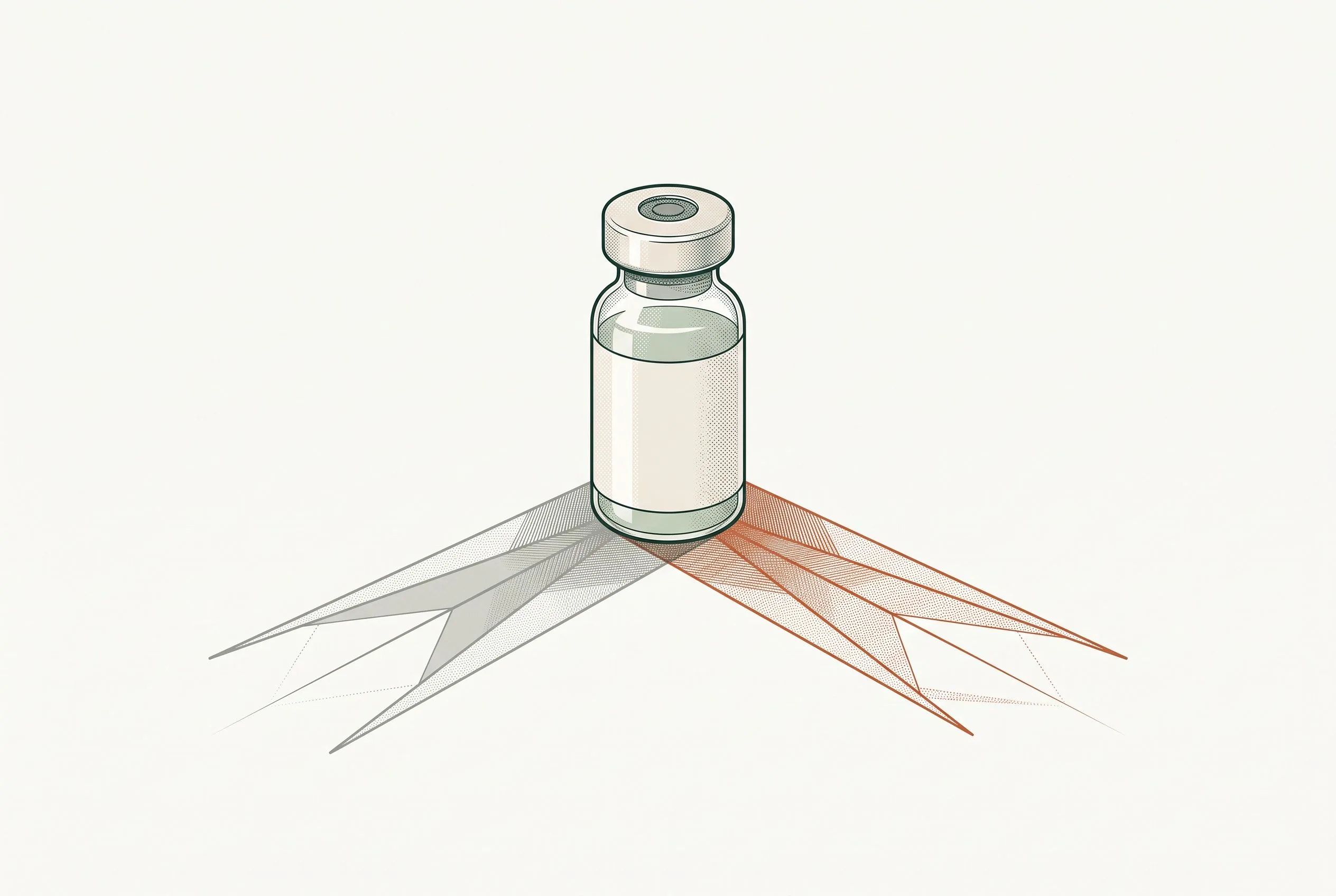
Zepbound and Mounjaro are the same medicine. Both contain the active drug tirzepatide, both are made by the same company (Eli Lilly), and both are a once-a-week injection under the skin. They work in exactly the same way in your body.[3]
There are two names because the drug is approved by the FDA for different purposes — and that affects how it's prescribed and how insurance pays for it.
What Each Name Is Approved For
Mounjaro is the brand approved to treat type 2 diabetes. It helps control blood sugar in adults and children 10 and older with type 2 diabetes, along with diet and exercise. It's also approved to lower the risk of serious heart problems — heart attack, stroke, and cardiovascular death — in adults with type 2 diabetes who are at high risk.[1]
Zepbound is the brand approved for weight management. It helps adults with obesity, or adults with overweight and a weight-related health problem (such as high blood pressure, high cholesterol, or type 2 diabetes), lose weight and keep it off, along with a reduced-calorie diet and more physical activity.[2][5] Zepbound is also approved to treat moderate-to-severe obstructive sleep apnea — a condition where breathing repeatedly stops during sleep — in adults with obesity.[6]
Side-by-Side Comparison
| Mounjaro | Zepbound | |
|---|---|---|
| Active drug | Tirzepatide | Tirzepatide |
| Maker | Eli Lilly | Eli Lilly |
| Main FDA-approved use | Type 2 diabetes (blood sugar control); lowering heart risk in high-risk diabetes | Weight management; obstructive sleep apnea in adults with obesity |
| Who it's for | Adults and children 10+ with type 2 diabetes | Adults with obesity, or overweight with a weight-related condition |
| Doses | 2.5, 5, 7.5, 10, 12.5, 15 mg | 2.5, 5, 7.5, 10, 12.5, 15 mg |
| How it's given | Weekly injection under the skin | Weekly injection under the skin |
| How it works | Same | Same |
How the Medicine Is Taken (the Same for Both)
- Inject once a week, on any day, at any time of day, with or without food.
- Inject into the stomach area, thigh, or upper arm. Change the exact spot with each injection.
- The dose starts low and increases slowly over several weeks to reduce stomach side effects. Your prescriber will tell you your exact dose and when to move up — see the Zepbound dosing schedule.
- If you miss a dose, take it within 4 days (96 hours). If more time has passed, skip it and take your next dose on your regular day.[1][2] More: missed GLP-1 dose.
- Store pens and vials in the refrigerator; never freeze them. Full limits: GLP-1 storage rules.
Important: Do Not Use Both Together
Because Zepbound and Mounjaro are the same drug, they should never be taken at the same time, or combined with any other GLP-1 medicine. Doing so would be a double dose and could be dangerous.
If your prescription is switched from one to the other, you aren't adding a new medicine — you're continuing the same one under a different name.
Side Effects to Know About (the Same for Both)
The most common side effects are stomach-related: nausea, diarrhea, vomiting, constipation, stomach pain, indigestion, and burping. They're usually mild to moderate and often improve over time, especially as your body adjusts to the dose.[4] More: managing nausea on GLP-1s.
Call your prescriber right away if you have:
- Severe stomach pain that may spread to your back, with or without vomiting — possible pancreas inflammation
- Signs of a serious allergic reaction — swelling of the face, lips, or throat; trouble breathing
- A lump or swelling in the neck, hoarseness, or trouble swallowing
- Signs of low blood sugar — shaking, sweating, confusion; more likely if you also take insulin or certain other diabetes pills
Tirzepatide carries a warning about a rare type of thyroid tumor seen in animal studies. Tell your prescriber before starting if you or a family member has had medullary thyroid cancer or a condition called MEN 2.
If you take birth control pills: tirzepatide can make them less reliable for 4 weeks after you start and after each dose increase — see birth control during GLP-1 dose escalation.
Why Your Insurance May Cover One but Not the Other
Even though they're the same medicine, insurance plans often treat them differently. Many plans cover Mounjaro for diabetes but have separate, sometimes stricter rules for covering Zepbound for weight management.[8] This is one of the most common reasons a prescriber chooses one brand over the other.
If cost or coverage is a concern, ask your pharmacist or prescriber about your specific plan and any savings programs. More: GLP-1 insurance coverage and prior authorization.
What's Still Being Studied
Tirzepatide is being tested for more conditions, and GLP-1 medicines as a group continue to gain new approved uses.[7] New approvals apply to a specific brand, which is why the same drug can carry different uses under different names.
Questions to Ask Your Care Team
- Which one is right for my condition?
- What dose am I starting on, and when will it go up?
- What should I do about side effects?
- Will my insurance cover this, and is there a savings program?
The Short Version
Zepbound and Mounjaro are the same drug — tirzepatide — at the same doses, injected weekly. Mounjaro is approved for type 2 diabetes; Zepbound is approved for weight management and obstructive sleep apnea. Which one you're prescribed usually comes down to your condition and your insurance. Never take both. How tirzepatide compares with semaglutide: Wegovy vs. Zepbound.
Frequently asked questions
Is Zepbound the same as Mounjaro?
Yes — they are the same medicine. Both contain tirzepatide, both are made by Eli Lilly, both come in the same doses (2.5 to 15 mg), and both are injected once a week. The only real difference is what the FDA approved each brand for: Mounjaro for type 2 diabetes, Zepbound for weight management and obstructive sleep apnea in adults with obesity.
Can I switch from Mounjaro to Zepbound?
Yes, with your prescriber. Because they're the same drug at the same doses, switching brands isn't starting a new medicine — you're continuing tirzepatide under a different name. Your prescriber will tell you which dose to take. Take your next dose on your regular day, and never take both in the same week.
Why does my insurance cover Mounjaro but not Zepbound?
Insurance plans follow the FDA-approved use. Many plans cover Mounjaro for type 2 diabetes but have separate, often stricter rules for covering Zepbound for weight management — or exclude weight-loss medications entirely. Ask your pharmacist or prescriber about your specific plan and any manufacturer savings programs.
Can I take Zepbound and Mounjaro together?
No — never. They are the same drug, so taking both would be a double dose and could be dangerous. Tirzepatide also shouldn't be combined with any other GLP-1 medicine, such as Wegovy or Ozempic.
Sources
- MOUNJARO (tirzepatide) Prescribing Information — DailyMed (FDA)
- Zepbound Prescribing Information — DailyMed (FDA)
- FDA Orange Book — Approved Drug Products
- Tirzepatide (Zepbound) for the Treatment of Obesity — Coppenrath & Mazyck, Am Fam Physician 2024
- FDA Green-Lights Tirzepatide, Marketed as Zepbound, for Chronic Weight Management — Abbasi, JAMA 2023
- Glucagon-Like Peptide-1 Receptor Agonists for Obstructive Sleep Apnea: A Review — Harris & Kaffenberger, JAMA Otolaryngol Head Neck Surg 2026
- New Molecules and Indications for GLP-1 Medicines — Gonzalez-Rellan & Drucker, JAMA 2025
- Clinical Management of Obesity, Third Edition — The Obesity Society (2025)
This article is for education and does not replace your prescriber’s instructions or the FDA Medication Guide that comes with your medication. Clinical content reviewed by Dr. Prajeet Reddy, MD, Medical Director (Cyane Medical Group California PC).
$29/mo membership — the lowest in GLP-1 telehealth. No contracts.